
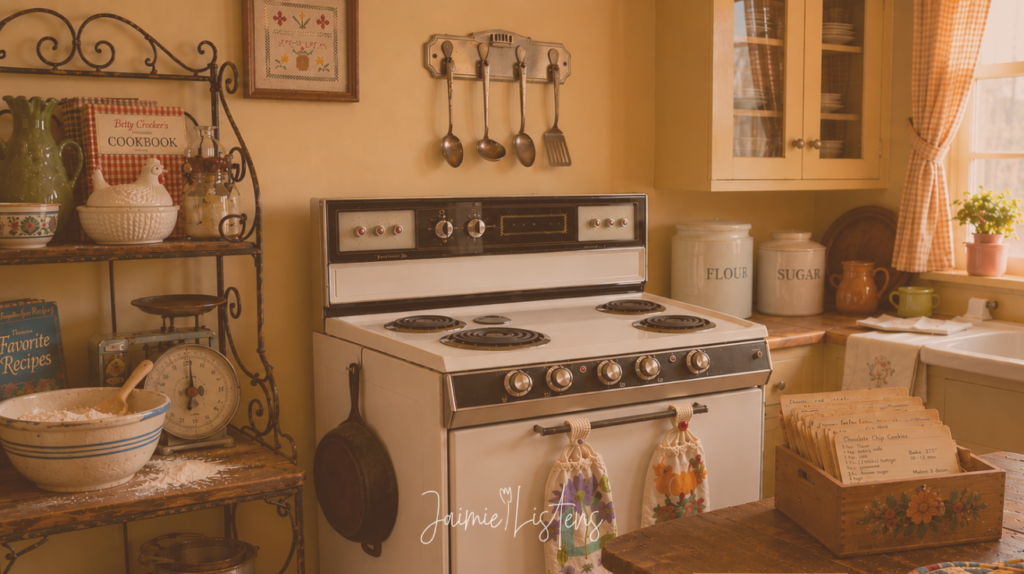
There’s a reason the vintage grandma house aesthetic is suddenly everywhere again, and I don’t think it’s just about old dishes, floral wallpaper, or cute little cookie jars.
I think people are overwhelmed.
Life feels loud now. Fast. Constantly interrupted. Notifications, ads, subscriptions, delivery apps, endless scrolling, everybody staring at different screens in different rooms while eating different meals on completely different schedules. Even entertainment doesn’t feel the same anymore. We don’t really gather around the TV waiting all week for something special to come on. Everything is instant, available 24/7, and somehow still weirdly unsatisfying.
At some point, I just started craving quieter things.
Not necessarily a perfect old-fashioned life. Just slower, warmer, more connected moments that actually felt good to live in.
I started missing things I hadn’t thought about in years. Watching The Wizard of Oz once a year when it came on television and running to the bathroom during commercial breaks because you couldn’t pause it. Sitting around watching The Muppets. Going to Blockbuster and wandering around looking for movies while talking to strangers about what was good. Eating homemade food together while football played in the background. Spending time at my grandma’s house learning how to crochet, sneaking cookies out of the cookie jar, and running outside to pick berries.
None of those things were fancy, but they felt grounding in a way that modern life often doesn’t.
Why People Are Craving That Vintage Grandma House Aesthetic
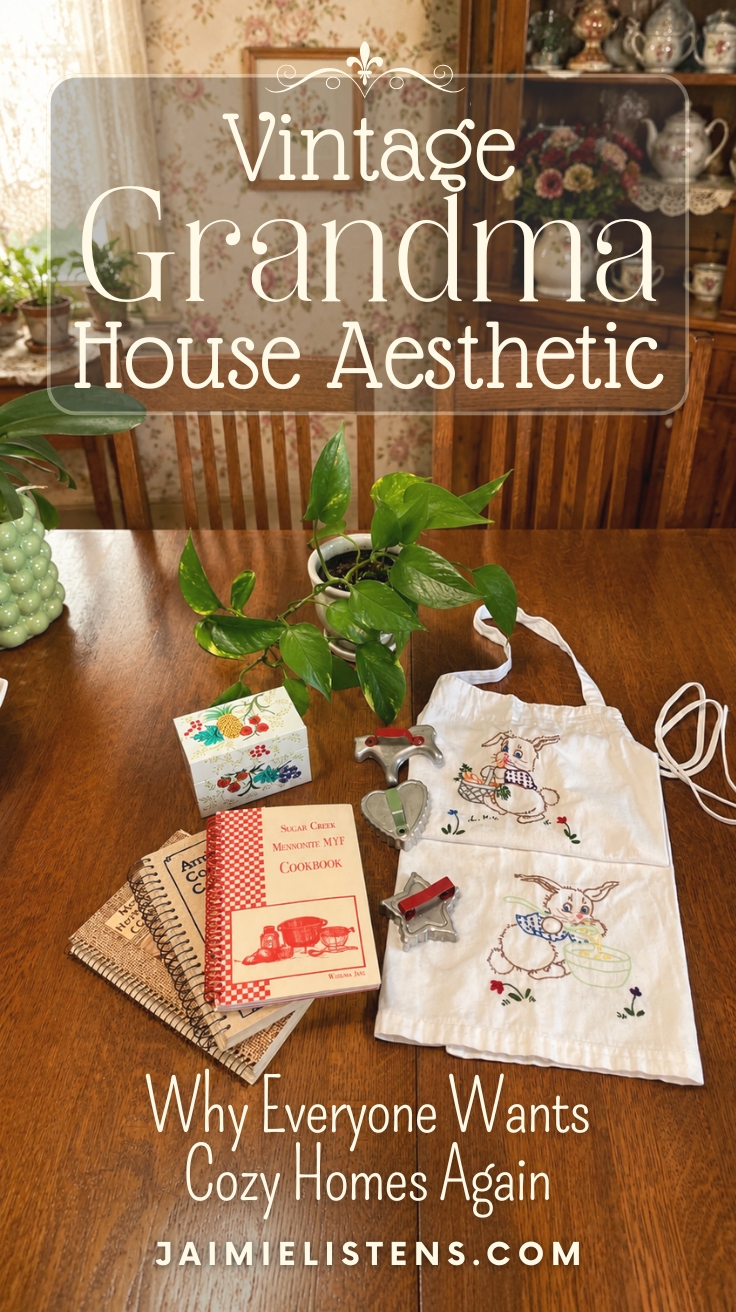
And I think a lot of people are feeling that right now, especially younger generations. They’re becoming nostalgic for things they didn’t even grow up with because they’re longing for something that feels more human and emotionally comforting than the world they inherited. You can see it in the popularity of older movies, cozy family sitcoms, crafting, baking, gardening, thrifting, physical books, DVDs, handwritten recipes, and homes that feel warm and layered instead of perfectly minimal and commercialized.
People want homes that feel alive again.
Not staged, or optimized or stripped of personality.
Just comforting, meaningful, imperfect places where people gather, share stories, make food, watch movies, laugh, and actually live.
That’s what I think people are really searching for when they fall in love with the vintage grandma house aesthetic. Let’s look at how it’s actually created without looking like you’re trying too hard.
Start With ONE Thing That Means Something to You
Begin With the Memory, Not the Decor
If you want to create a vintage grandma house aesthetic that actually feels warm and personal, don’t start by trying to recreate somebody else’s Pinterest-perfect house.
Start with one thing that means something to you.
Maybe it’s a recipe your grandmother used to make. Or…
- A handmade quilt.
- An old casserole dish.
- A crocheted blanket.
- A stack of old cookbooks.
- A candy dish.
- A movie you watched every Christmas.
- A collection of mugs that reminds you of somebody you loved.
The goal isn’t to perfectly recreate the past or buy a bunch of trendy “grandmacore” décor all at once.
It’s to reconnect with the feelings that made home feel comforting, grounding, warm, and alive.
Sometimes One Object Can Bring the Whole Feeling Back
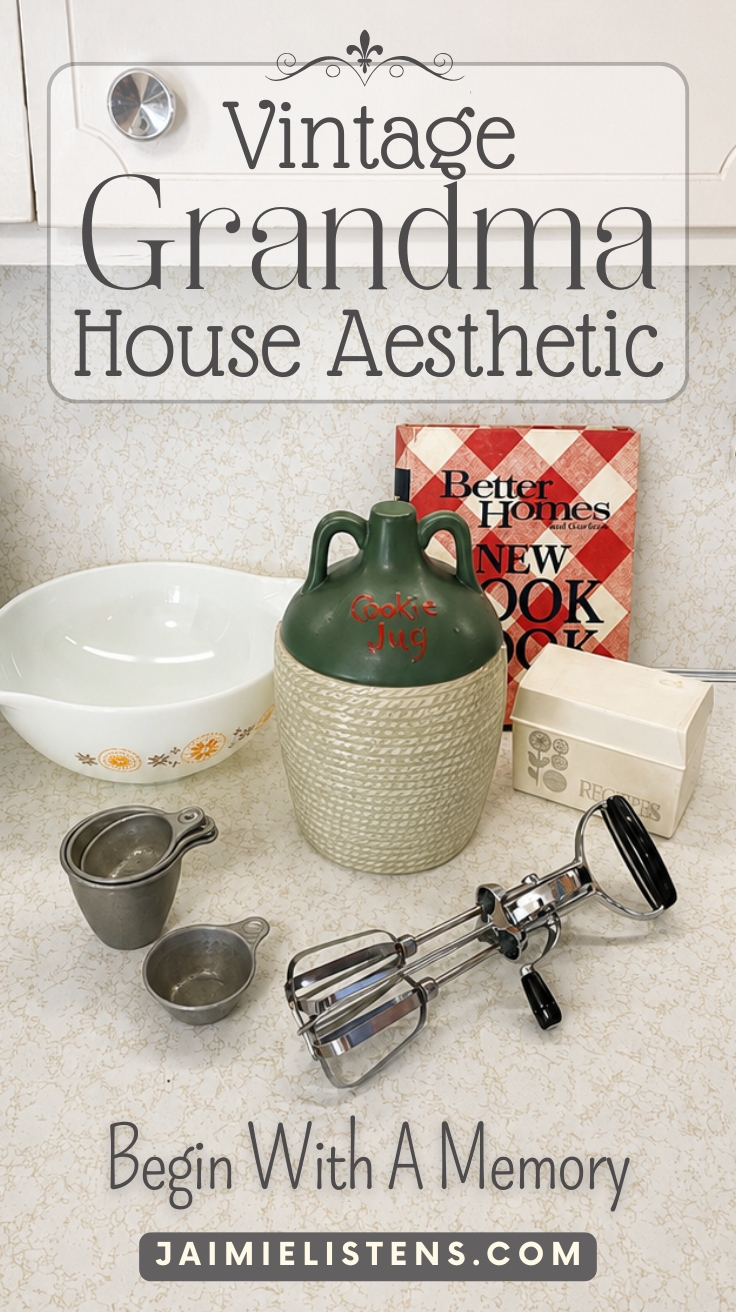
For me, it started with a cookie jar.
Every summer, we’d drive a little over two hours to my grandma’s house, and almost everybody had the same first destination when we walked through the door.
The kitchen.
More specifically, the McCoy cookie jar sitting on the counter.
My cousins, my aunts and uncles, all of us would head straight for that cookie jar, pull the lid off, and grab chocolate chip applesauce cookies before we did just about anything else. Grandma always had that jar loaded and ready to go, with extra cookies stashed in the freezer for backup because she knew that cookie jar was going to get raided.
That cookie jar wasn’t just decoration sitting on the counter. It was tied to the feeling of being at Grandma’s house. The sound of people talking in the kitchen. Football on the TV. Family drifting in and out of the room. The comfort of knowing there would always be something homemade waiting for you there.
Years later, I found a McCoy cookie jar on eBay that looked almost exactly like hers. Not the exact same one, of course, but when I saw it, it instantly brought me right back to being a child in her kitchen again.
So I bought it and filled it with the same cookies she used to make for us when we were kids.
That’s Why This Style Is Really About Feeling, Not Decorating
And I think that’s the heart of what people are really searching for with this whole vintage grandma house aesthetic trend.
It’s not really about decorating.
It’s about recreating feelings.
And if you didn’t grow up with memories like this, or maybe didn’t have a grandma who baked cookies and taught you how to crochet, then you can borrow a little piece of mine. Here’s a link to the chocolate chip applesauce cookie recipe we grew up eating so you can fill your own cookie jar too.
What Actually Makes a Vintage Grandma House Feel Cozy
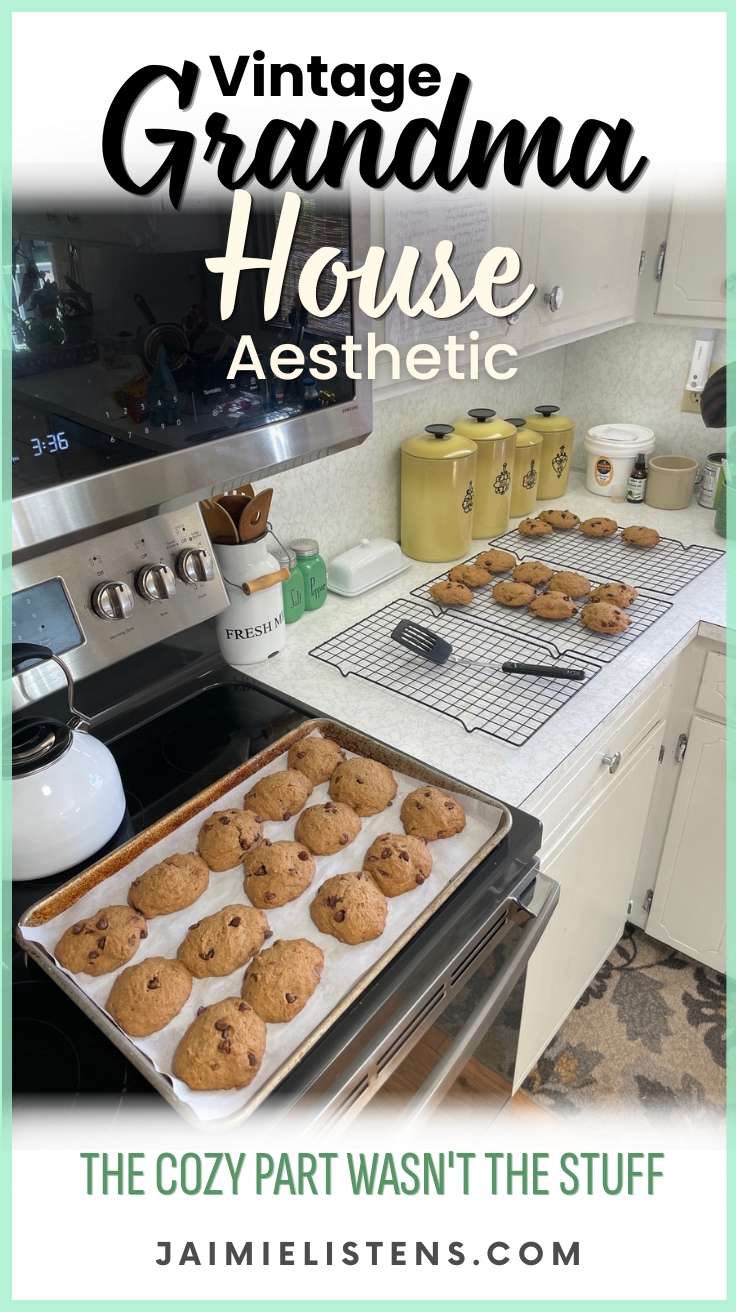
A lot of people think creating a vintage grandma house aesthetic is about perfectly recreating a certain decade or buying all the “right” vintage-looking things, but I don’t think that’s what makes these homes feel comforting at all.
What people are really responding to is the feeling.
The warmth, a feeling of familiarity, and the comfort of walking into a home that feels relaxed, welcoming, and deeply human.
Real grandma houses weren’t perfect.
There were little chips in dishes, faded recipe cards, worn spots on furniture, practical clutter, and signs that actual people lived there. Not filthy or neglected, just lived in and cared for instead of perfectly curated.
That’s part of what made them feel emotionally safe.
You could sit down.
Eat something homemade.
Put your feet up.
Have a conversation.
Exist without feeling like you were going to ruin the aesthetic by simply being a person.
And I believe that’s what a lot of people are craving right now. Not just old décor, but homes that feel grounding, personal, forgiving, and comforting in a world that often feels overstimulating and disconnected.
Real Grandma Houses Were Built Across Decades
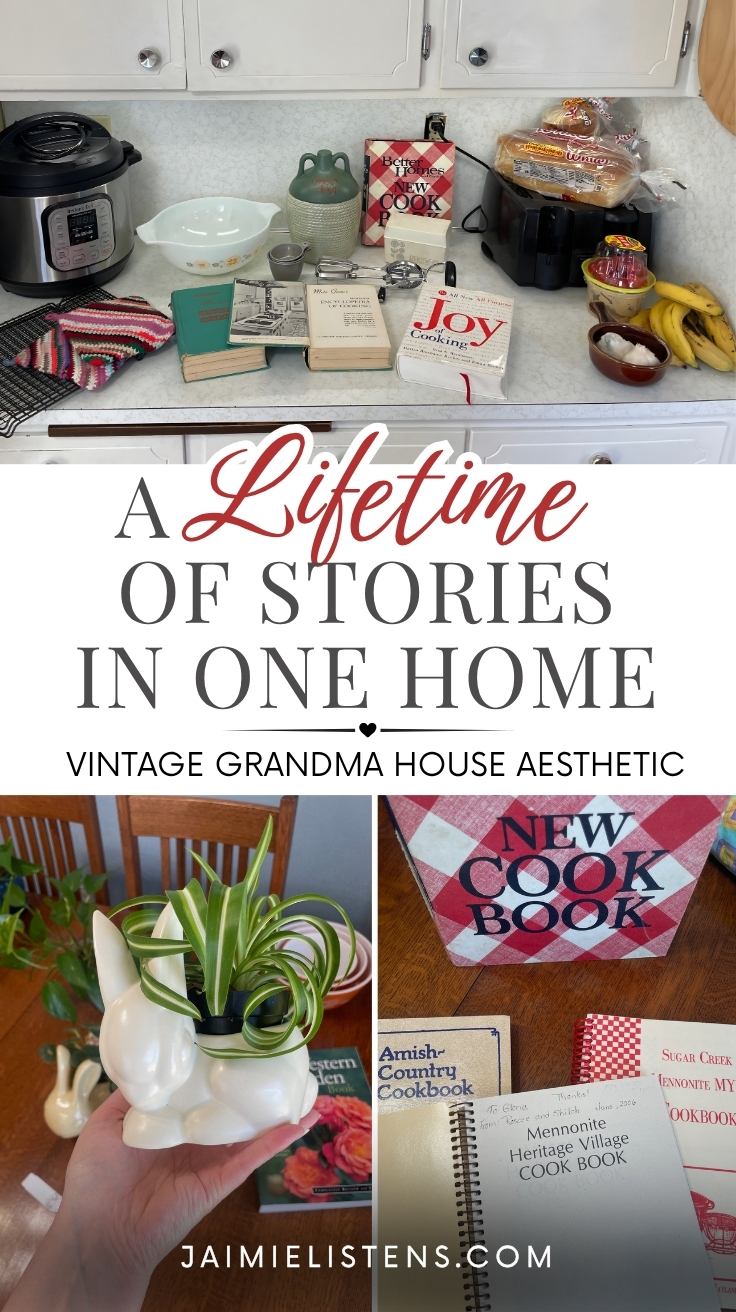
One of the biggest mistakes people make when trying to recreate this style is thinking everything has to come from the same exact era. Real grandma houses usually didn’t look like somebody froze one specific decade in time and preserved it like a museum.
They evolved naturally over years and years of living.
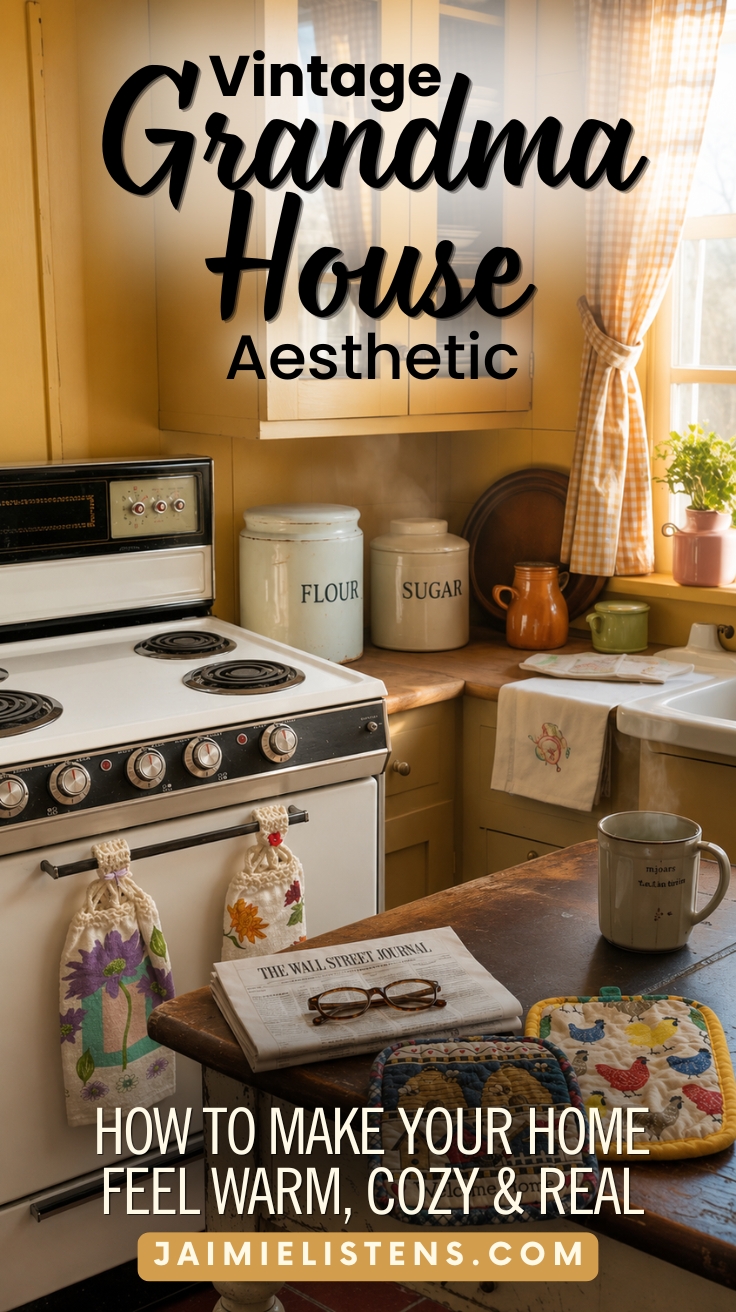
There would be older pieces mixed with newer replacements, family heirlooms sitting next to practical everyday items, and things people simply kept because they loved them or they still worked well. A kitchen might have a cookie jar from the 1970s, a mixer from the 1980s, crocheted potholders somebody made in the 1990s, newer appliances, old family photos, mismatched dishes, and random little objects collected over an entire lifetime.
That layering is part of what makes these homes feel comforting and believable.
Nothing is trying too hard.
It doesn’t feel staged or overly designed because it wasn’t built all at once. It was built slowly through memory, habit, practicality, gifts, hand-me-downs, favorite objects, and everyday life.
I figure this is one reason some modern “grandmacore” spaces can end up feeling a little hollow even when they’re visually pretty. If everything looks perfectly coordinated and freshly purchased at the same time, it loses the emotional texture that makes real homes feel warm.
A cozy home usually has some history mixed into it.
That history might come from an old cookbook your mom used, a thrifted casserole dish, a chair that’s been in the family forever, handmade blankets, old holiday decorations, or even a goofy little item nobody else would understand but your family loves anyway.
That’s the kind of stuff people remember years later.
Not whether every single item matched perfectly.
Function Came First (And That’s Why These Homes Felt So Good)
Older Homes Felt Good Because Things Actually Worked
One thing I’ve noticed about a lot of older kitchen items is they were usually designed to actually be USED. Imagine that. 😂
They weren’t just sitting there looking cute for a photo. People cooked with them every single day, and honestly, most of that older stuff works better than the newer versions we have now.
My vintage salt and pepper shakers are a perfect example. I paid way more for them than I intended to because apparently they were being sold individually instead of as a set, which was a fun little surprise at the register. But after using them, I completely understood why I loved them so much.
They actually pour correctly.
That sounds ridiculous until you’ve dealt with modern salt shakers that either give you three grains of salt over the course of five business days or suddenly dump half the container onto your mashed potatoes like they’re trying to ruin Thanksgiving.
Practical Things Quietly Made Daily Life Better
Older kitchen tools were often designed around real daily life.
Bowls were sturdy. Canisters held useful amounts of things. Mixing bowls had weight to them so they didn’t slide all over the counter while you were stirring something. Towels actually absorbed water instead of just pushing it around in circles while making you angrier by the second.
That’s part of why these homes feel comforting.
The objects weren’t just decorative. They quietly supported daily life in practical ways. People kept things because they worked well, felt familiar, lasted forever, or made everyday tasks a little nicer.
That’s a very different mindset from constantly buying trendy things that look good online but make no sense in real life.
A real grandma kitchen usually wasn’t trying to impress strangers on the internet. It was trying to feed people, welcome people, store things efficiently, survive holidays, and make daily life run a little smoother. Ironically, I think that’s exactly why those spaces ended up feeling so warm and beautiful in the first place.
Choose Things That Mean Something to YOU
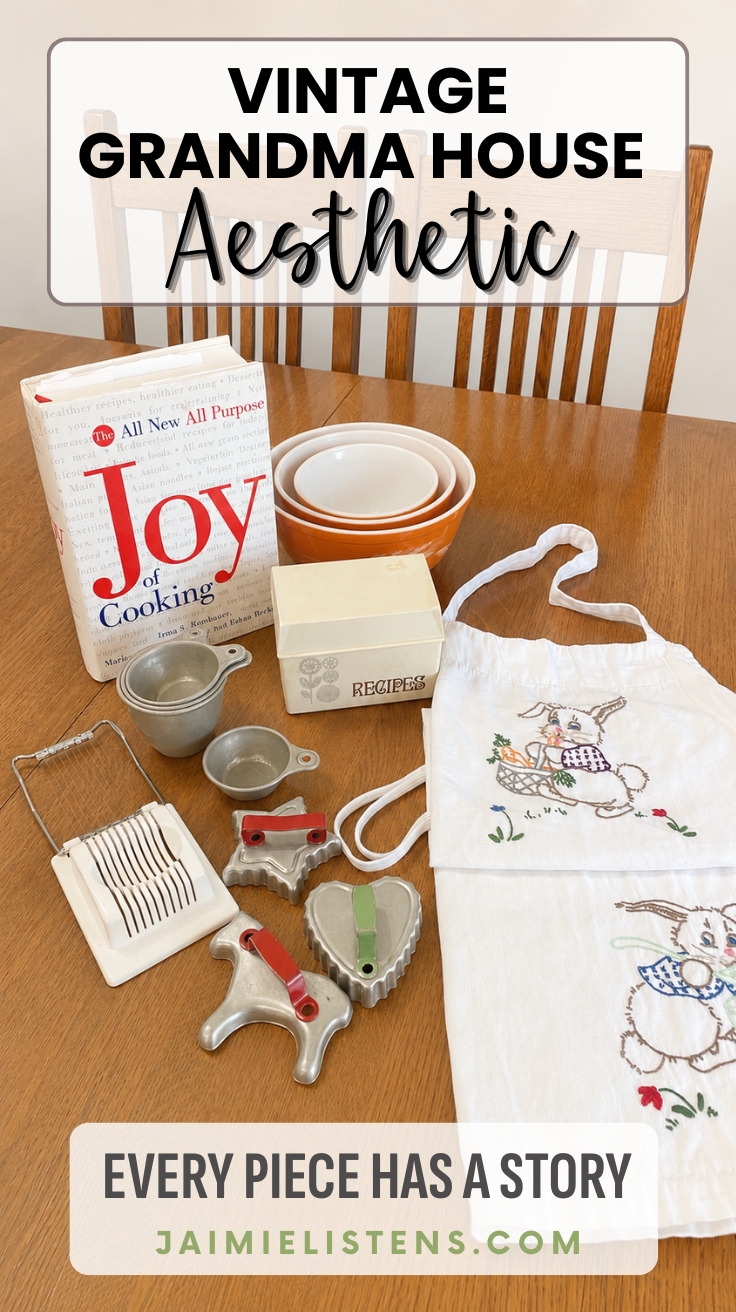
Meaning Matters More Than Matching
I think one of the biggest reasons some cozy vintage-style homes feel authentic and others feel a little hollow is whether the person actually has an emotional connection to the things inside the house.
You can usually tell when somebody just bought a bunch of random “grandmacore” items because Pinterest said they matched the aesthetic. It might look cute at first, but it often feels kind of empty because there’s no history behind any of it. No stories, or memories, and sadly no personality.
Warm Homes Are Built on Attachment, Not Just Aesthetics
The homes that feel the warmest are usually filled with things people genuinely enjoy using, looking at, remembering, or talking about.
Sometimes that’s:
- a casserole dish that reminds you of family dinners
- an old afghan blanket somebody made by hand
- a stack of worn children’s books
- a candy dish your grandma always kept full
- an old movie you watch every Christmas
- a weird little figurine everybody in the family jokes about
- a set of canisters that reminds you of somebody’s kitchen when you were little
And sometimes it’s not even something pretty.
For YEARS, we had this absolutely hideous couch with one of those giant brightly colored fruit and cornucopia patterns on it. The fabric was rough and scratchy, every dog we ever owned slept on it, things were constantly getting lost between the cushions, and I’m pretty sure multiple generations of snacks and spilled drinks had soaked into that thing over the decades.
It was objectively ugly. 😂
But at the same time, it was completely tied to our family memories. Everybody remembers that couch. Everybody sat on that couch. It was part of holidays, movie nights, naps, conversations, chaos, and everyday life.
That’s the kind of thing people actually get emotionally attached to.
Not because it’s trendy or beautiful, but because it became part of the story of home.
Your Memories Will Always Feel More Real Than Someone Else’s Aesthetic
I think that’s why trying to copy somebody else’s exact aesthetic usually falls a little flat. Their memories are not your memories. Their version of comfort might not feel comforting to you at all.
Some people grew up with floral wallpaper and crocheted blankets. Other people remember dark wood furniture, old recliners, rabbit-ear antennas wrapped in aluminum foil, giant tins of popcorn at Christmas, or grandparents who always had a mysterious bowl of hard candy sitting around for no apparent reason.
That’s the stuff worth paying attention to.
Not what’s trendy, or what everybody else is buying.
And definitely not what some influencer says belongs in a grandma kitchen.
Pay attention to the things that instantly make you feel something when you see them, because that emotional connection is usually what makes a home feel real.
Don’t Over-Style It
One of the biggest mistakes people make with this style is trying too hard.
Real grandma houses were not perfectly curated. Things didn’t all match. There were weird little collections everywhere, blankets tossed over chairs, chipped dishes still being used, and at least one piece of furniture everybody questioned but nobody got rid of because it had basically become part of the family at that point.
And that’s exactly why those homes felt good.
People were actually living in them.
Nobody was worried about making the house look untouched all the time. Kids ran through the rooms, dogs took over the couch, somebody was always cooking something, and there was usually some random object sitting around that made absolutely no sense unless you knew the backstory behind it.
That relaxed, lived-in feeling is a huge part of what makes a home feel comforting.
Not dirty.
Not chaotic.
Just human.
I think some people accidentally strip all the personality out when they try to recreate this aesthetic too perfectly. A cozy home shouldn’t feel like a museum display where nobody’s allowed to sit down or touch anything. It should feel like you can come in, grab a cookie, flop down in a chair, and stay awhile.
Use the Good Stuff
One thing I’ve noticed about a lot of genuinely cozy homes is people actually USE the things they love.
The pretty dishes are not locked away in a cabinet waiting for the Queen of England to stop by unexpectedly. The handmade blankets get used. The cookie jars get filled. The casserole dishes end up in the oven. The good towels get pulled out instead of being preserved for some imaginary future emergency.
That’s part of what gives a home warmth.
Once everything becomes too precious to touch, the house starts feeling more like storage than living.
Now obviously, I’m not saying you should treat family heirlooms like hockey pucks and start frisbee-throwing vintage Pyrex across the kitchen. But I do think there’s something comforting about surrounding yourself with things that are both meaningful and useful.
Realistically, a lot of older generations bought things with the expectation that they’d be used for decades. They cooked with them, repaired them, passed them down, and kept enjoying them instead of hiding them away forever.
That mindset creates a very different feeling in a home than constantly saving everything “for someday.”
Sometimes the cozy feeling comes from making pancakes in the old mixing bowl, drinking coffee out of the mug you actually love, or filling the cookie jar instead of just setting it on a shelf and calling it décor.
The Best Places to Find Vintage Grandma House Treasures
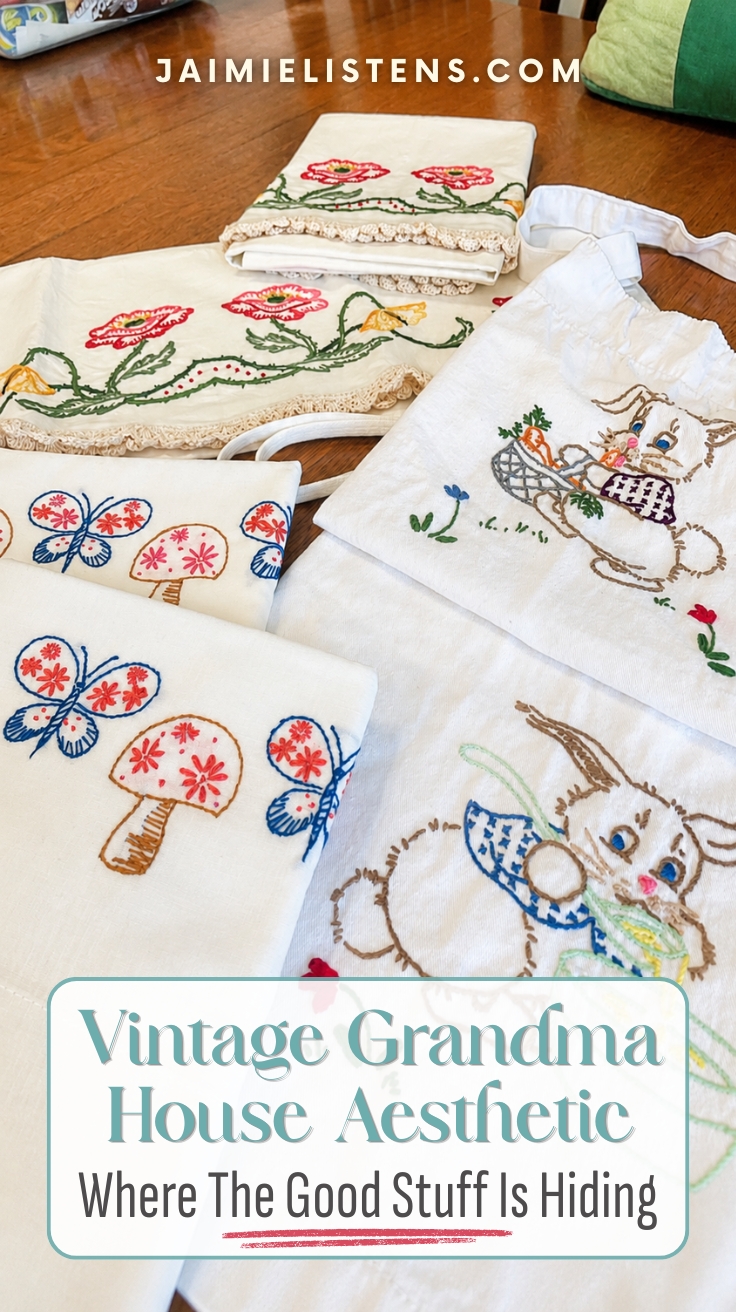
One nice thing about this style is you really do not have to spend a fortune to create it. Trying to buy an entire “grandmacore aesthetic” all at once would probably make the house feel less authentic anyway.
Real cozy homes usually come together slowly over time.
You find a cookie jar at a thrift store one month. A stack of old cookbooks at a yard sale. A crocheted blanket at an estate sale. Maybe your mom gives you an old casserole dish she’s had forever, or you stumble across something on eBay that instantly reminds you of your childhood.
Half the fun is the hunt.
And the stories behind how you found things become part of the comfort too.
I still laugh about my vintage salt and pepper shakers because I thought I was buying the set for thirty bucks. Then I got up to the register and realized they were THIRTY DOLLARS EACH. I about crapped my pants standing there doing mental gymnastics about WHY someone would price the pair individually.
But I loved them so much that I bought them anyway, and now every time I use them, I think about that moment.
That’s the kind of stuff that gives a home personality.
Not everything has to be expensive or valuable either.
Some of the best finds are inexpensive little things that just make you smile or instantly remind you of somebody you loved.
Some of my favorite places to look are:
- thrift stores
- antique malls
- estate sales
- yard sales
- flea markets
- eBay
- Etsy
- family attics and basements
Estate sales are especially interesting because sometimes you can walk into a house and see an entire lifetime layered together in one place. You start realizing real cozy homes were never built from one shopping trip or one perfectly matching collection. They were built slowly through everyday life, memory, usefulness, and the little things people loved enough to keep.
A Cozy Home Isn’t Built in One Shopping Trip
I think this is where a lot of people accidentally put pressure on themselves.
They see a beautiful cozy kitchen online and feel like they need to recreate the entire thing immediately, but real homes usually do not come together that way at all.
The best grandma-style homes were built little by little over decades of living.
Some things were inherited, others were gifts. There were thrift store finds. Some were practical purchases people ended up loving for years. Other things probably showed up because somebody’s relative said, “Do you want this before I donate it?” 😂
That slow layering is part of what gives a home personality.
You start collecting stories along with the objects. You remember where you found things, who gave them to you, what recipe you always make in that bowl, or which chair everybody fights over during the holidays.
I believe homes feel the warmest when they evolve naturally instead of being forced all at once.
So if you’re trying to create this feeling in your own home, give yourself permission to take your time with it. You do not need a giant budget, a perfectly curated plan, or a house full of matching vintage décor by next weekend.
Start with one meaningful thing, use what you love, and let the rest build slowly over time.
Learn the Skills That Made These Homes Feel Alive
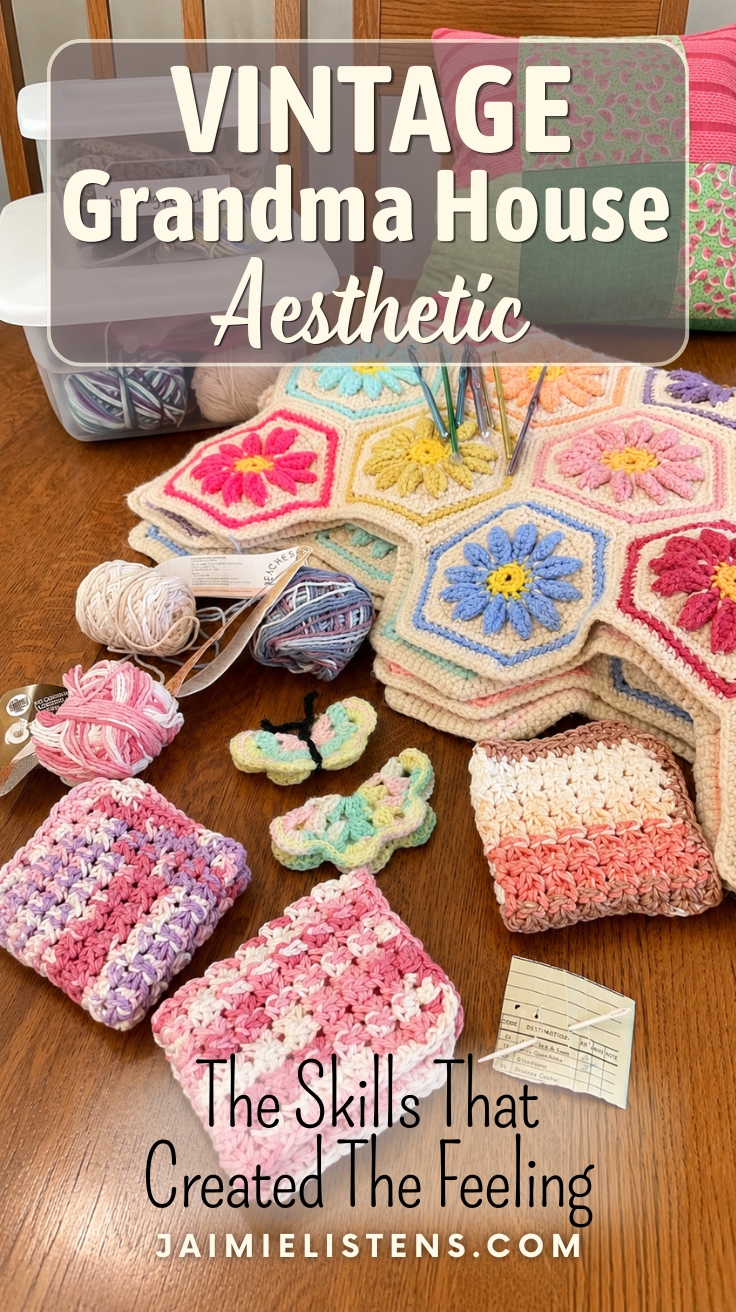
A huge part of what made these homes feel cozy had nothing to do with the stuff inside them. It was what people were actually doing there.
Somebody was always cooking something. There were cookies cooling on the counter, vegetables being chopped up for dinner, somebody hemming a pair of pants, crocheting a blanket, planting flowers outside, or teaching a kid how to make something instead of just buying it.
The house felt alive because people were participating in life there instead of just consuming things.
That’s probably why so many people are suddenly getting pulled toward older hobbies again. Baking sourdough, crocheting, sewing, embroidery, gardening, canning, quilting, reading physical books… all of it slows your brain down in a way modern life usually doesn’t.
There’s also something weirdly comforting about creating useful things with your own hands. You end up with stories attached to them. You remember who taught you, where you learned it, the disaster that happened the first time you tried it, or the recipe card covered in butter stains because everybody keeps using it.
Now, I’m not saying you need to wake up at 4:30 in the morning to milk a goat and churn butter by candlelight before the rooster crows.
But learning even one old-fashioned skill can completely change the feeling of a home.
Maybe it’s making your grandma’s cookies from scratch. Maybe it’s learning how to crochet potholders, grow tomatoes, sew curtains, or bake bread that doesn’t double as a home security weapon.
That kind of stuff adds warmth to a house in a way store-bought décor never really can.
Final Thoughts: Make It Feel Real, Not Perfect
At the end of the day, I really don’t think people are craving perfection right now.
They’re craving comfort.
A home that feels warm when you walk into it. A kitchen that feels lived in. Familiar smells. Favorite recipes. Old movies. Handmade things. Football playing in the background while somebody falls asleep in a recliner with a plate balanced dangerously on their lap.
That’s the stuff people remember.
Not whether every dish matched perfectly or whether the house looked trendy enough for social media.
I figure the reason this whole vintage grandma house aesthetic trend has taken off is because people miss feeling connected to family, and to slower routines. A sort of connection to physical things that hold memories instead of constantly chasing the next fast, disposable thing.
And the nice part is you do not need to recreate somebody else’s exact version of cozy to bring that feeling into your own home.
Start small.
Find one thing that means something to you. Cook one recipe. Hang one old photo. Use the good dishes. Learn one old skill. Let your home slowly collect memories instead of trying to perfectly design it all at once.
That’s usually where the real magic comes from anyway.
And now I want to hear from you! What’s something from your childhood that instantly feels comforting when you think about it? Maybe it’s a recipe, a movie, a piece of furniture, a weird family tradition, or an object that reminds you of somebody you loved. Tell me about it in the comments because seriously, I love hearing these kinds of stories.
AI Disclosure: This post was created with the assistance of AI tools for brainstorming, editing, and organization, which helps me manage chronic pain and physical limitations during long writing sessions. All content is based on my real-life experience and is reviewed and edited by me. Some or all images in this post may be AI-generated for illustration and inspiration. Learn more about how I use AI here.
Disclaimer: Jaimie is not the great and powerful Wizard of Oz, a lawyer, a doctor, a veterinarian, or a CPA. Nothing you read in my blog is a substitute for professional advice and doing your own good research. Remember that just because someone has credentials doesn’t guarantee their advice is golden or perfect. Put your smart hat on and do your due diligence. Good luck!

Leave a Reply