
Most of us know we should keep our important documents organized. The problem is figuring out which documents actually matter, where they are, and whether we already have everything we need.
I was reminded of this recently when my husband couldn’t find my father-in-law’s certified birth certificate. He needed it to get an upgraded driver’s license before flying to an upcoming family reunion, and replacing a certified document isn’t always quick or easy.
What should have been a simple errand suddenly became a race against the clock.
That’s the tricky thing about important paperwork. Most of the time, it sits quietly in a drawer, file box, or binder. Then one day you need it right now.
If you’ve ever wondered whether you’re missing important records, which documents belong together, or how to keep everything organized in one place, this Important Documents Checklist will help you get started.
It will help you identify the records that matter most so you can gather them, organize them, and know where they are before you need them.
Because when life gets complicated, the last thing you want is a game of paperwork hide-and-seek.
Important Documents Checklist: What Should Every Family Gather First?
Important documents are easy to ignore until one missing paper slows everything down.
A birth certificate, insurance policy, medical record, password, property document, or legal form may not feel urgent today. But when you need it for travel, a hospital visit, an insurance claim, a family emergency, or an estate situation, you do not want to be digging through random folders and mystery drawers.
That’s why it helps to start with categories instead of trying to remember every possible document from memory.
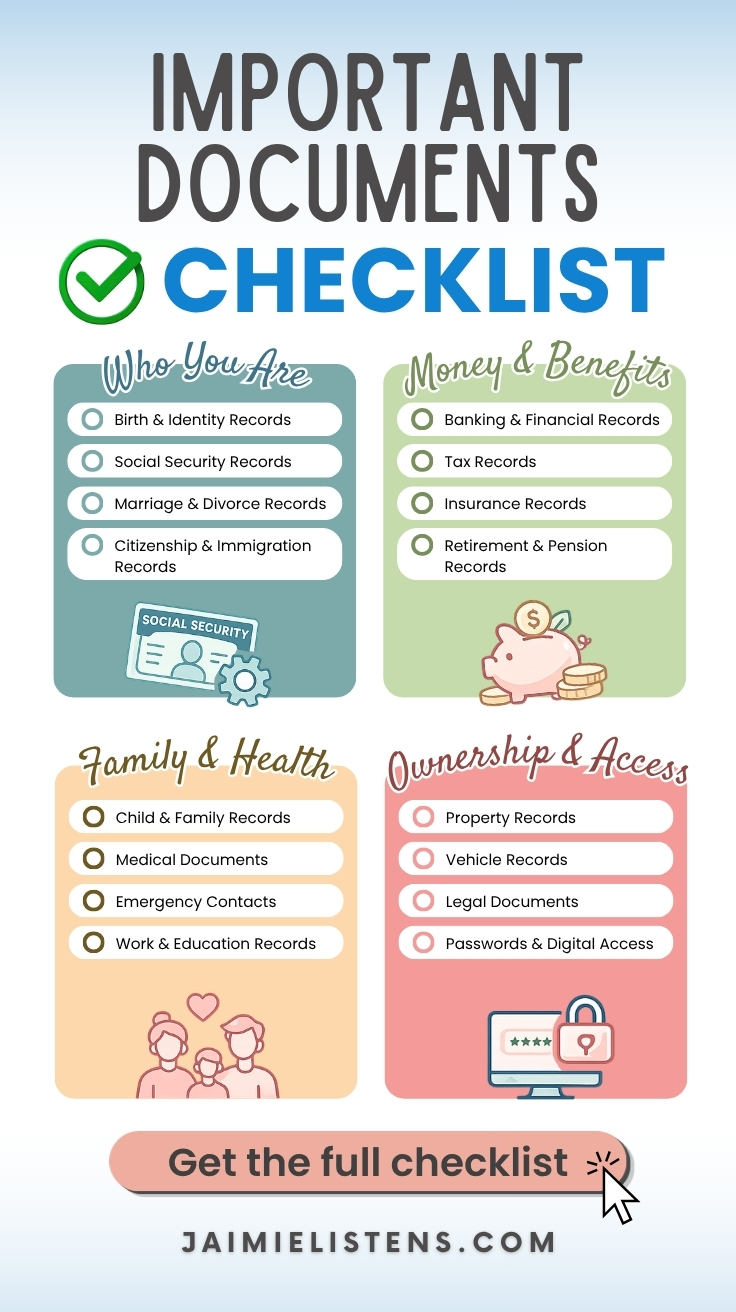
The full printable checklist goes into more detail, but these are the main categories worth reviewing first:
- Personal identification documents
- Family records
- Financial documents
- Property and ownership records
- Insurance information
- Medical information
- Legal and estate planning documents
- Emergency contact information
Want the complete list? Grab the free Important Documents Checklist below and use it to gather your family’s most important records one category at a time.
How to Organize Important Documents in One Place
Start by choosing one home for your most important documents.
That might be a binder with sheet protectors, file folders in a cabinet, an accordion file, a portable document box, or a fireproof safe. The container matters less than the habit of keeping the right documents together.
Then sort your records by category so you are not digging through one giant pile every time you need something. Keep identification records together, insurance papers together, property records together, medical information together, and legal documents together.
Having a checklist can help you identify what belongs in your system before you even decide how to store it.
Once everything has a basic home, use your checklist to mark what you already have, what you still need to find, and what may need to be replaced.
What If You’re Missing Important Documents?
Don’t worry if you can’t find everything on the list right away.
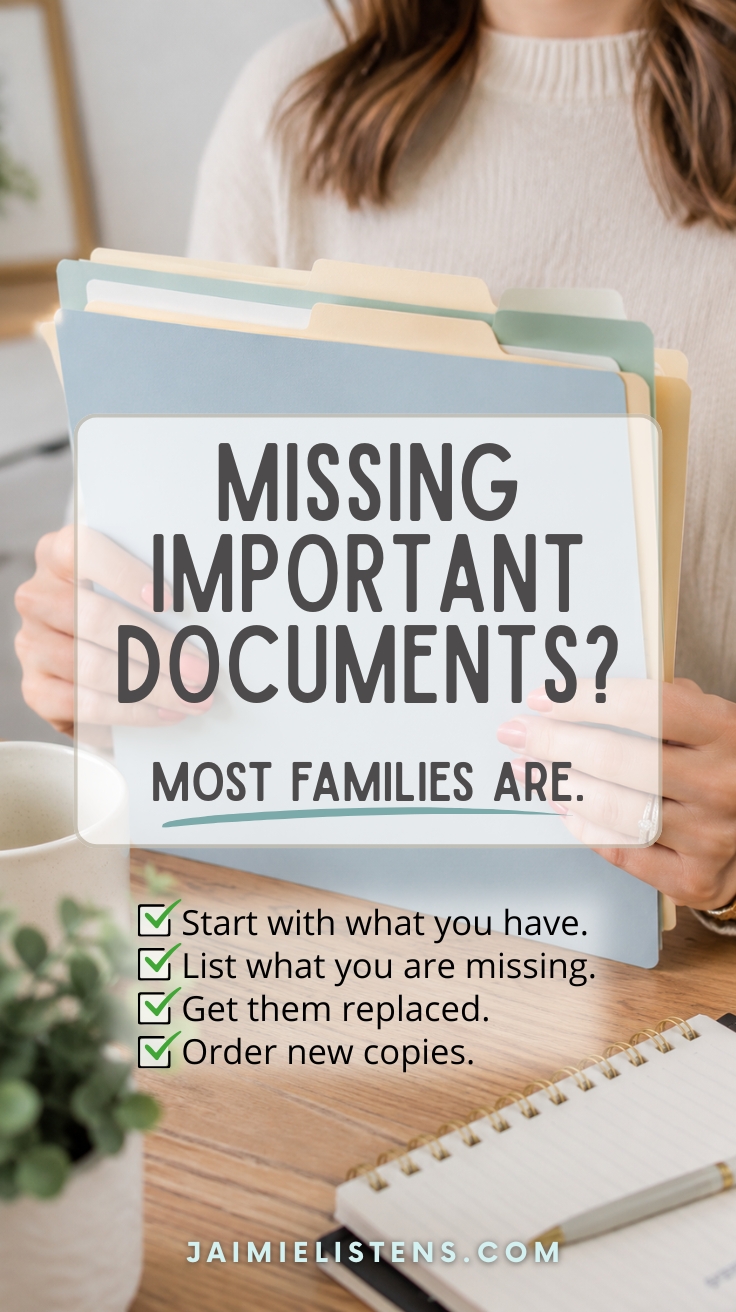
Most families discover they are missing a few documents, have outdated information, or aren’t completely sure where certain records are stored. That’s normal.
The goal isn’t to have a perfect paperwork system overnight. The goal is to identify what you already have, what you need to locate, and what may need to be replaced.
Even finding one missing document now can save you a lot of frustration later.
That’s exactly why I created the free Important Documents Checklist. It gives you a simple place to start and helps you work through the process one category at a time.
Download Your Free Important Documents Checklist
You don’t need a perfect filing system to get started.
You just need a way to identify the documents that matter most and a simple plan for gathering them in one place.
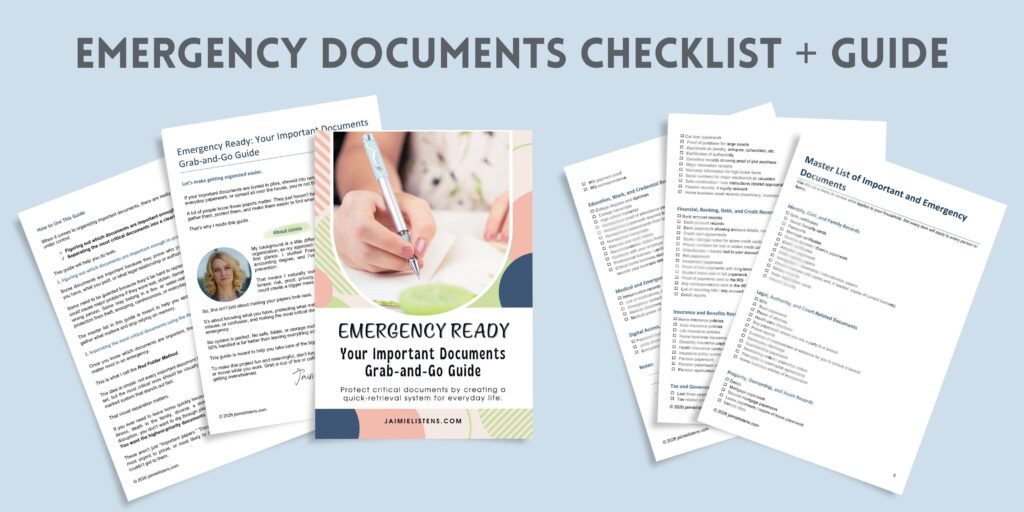
The Emergency Ready Important Documents Checklist will help you:
- Identify the most important documents for your household, so you don’t have to keep wondering if you got it right.
- Spot documents you may be missing, so you can deal with them now instead of discovering the problem during a deadline, emergency, or family crisis.
- Create a simple grab-and-go document system, so your highest-priority papers are easier to find when you need them fast.
- Prioritize the records that would be hardest to replace, so you know where to focus first instead of treating every paper like it deserves the same level of urgency.
- Stop relying on memory to keep track of everything, so you can get the important details out of your head and into a system you can actually use.
You’ll also get my Emergency Ready follow-up email series to help you turn the checklist into action, with practical storage tips, real-life paperwork stories, and simple ways to avoid the dreaded last-minute document scramble.
Download your free copy below and start building a system that helps you find what you need without the panic-search.
Getting Organized Is Easier Than You Think
If your important documents are scattered throughout the house, you’re not alone. Most people know this stuff matters. They just haven’t had a simple way to figure out what they have, what they’re missing, and where it all belongs.
The good news is that this is usually more straightforward than people think. With a checklist, a little focused time, and one place to keep your most important records, you can make a lot of progress in a single afternoon.
And once you know what you have and where to find it, you’ll spend a lot less time worrying about missing documents and a lot more time feeling prepared for whatever life throws your way.
Disclaimer: Jaimie is not the great and powerful Wizard of Oz, a lawyer, a doctor, a veterinarian, or a CPA. Nothing you read in my blog is a substitute for professional advice and doing your own good research. Remember that just because someone has credentials doesn’t guarantee their advice is golden or perfect. Put your smart hat on and do your due diligence. Good luck!
AI Disclosure: This post was created with the assistance of AI tools for brainstorming, editing, and organization, which helps me manage chronic pain and physical limitations during long writing sessions. All content is based on my real-life experience and is reviewed and edited by me. Some or all images in this post may be AI-generated for illustration and inspiration. Learn more about how I use AI here.

Leave a Reply