
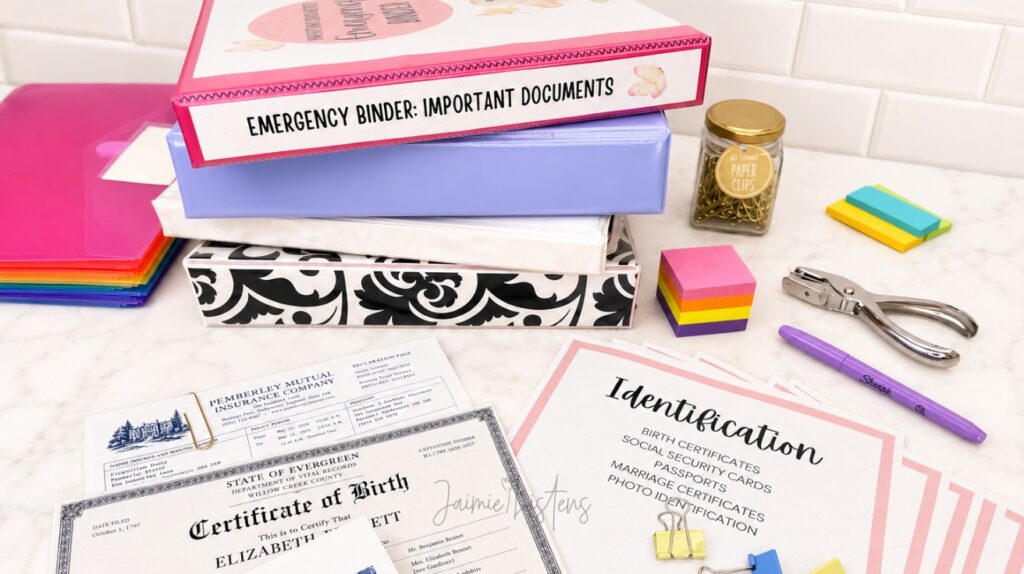
Most people think an important documents binder is supposed to be huge.
A giant binder. A table of contents. Color-coded tabs. Two hundred printable worksheets. Emergency contact pages for people you have not spoken to since 2014.
No thank you.
An important documents binder should make your life easier, not give you another paperwork hobby.
The goal is simple: organize the important documents you already have, figure out what is missing, and create one place where your family can find the records that matter most.
You do not need a binder full of homework pages that have to be updated every time your dentist gets a new phone number.
You need a practical system that helps you find birth certificates, insurance information, medical records, financial paperwork, property documents, and other important records when life gets complicated.
After years of using binders for business records, household systems, and the paperwork that somehow breeds in the dark, I have developed some very specific opinions about what works and what absolutely does not.
So before you buy the giant binder, print 87 worksheets, and accidentally create a new administrative burden for yourself, let’s talk about how to set up an important documents binder that can actually survive real life.
Why Every Family Needs an Important Documents Binder
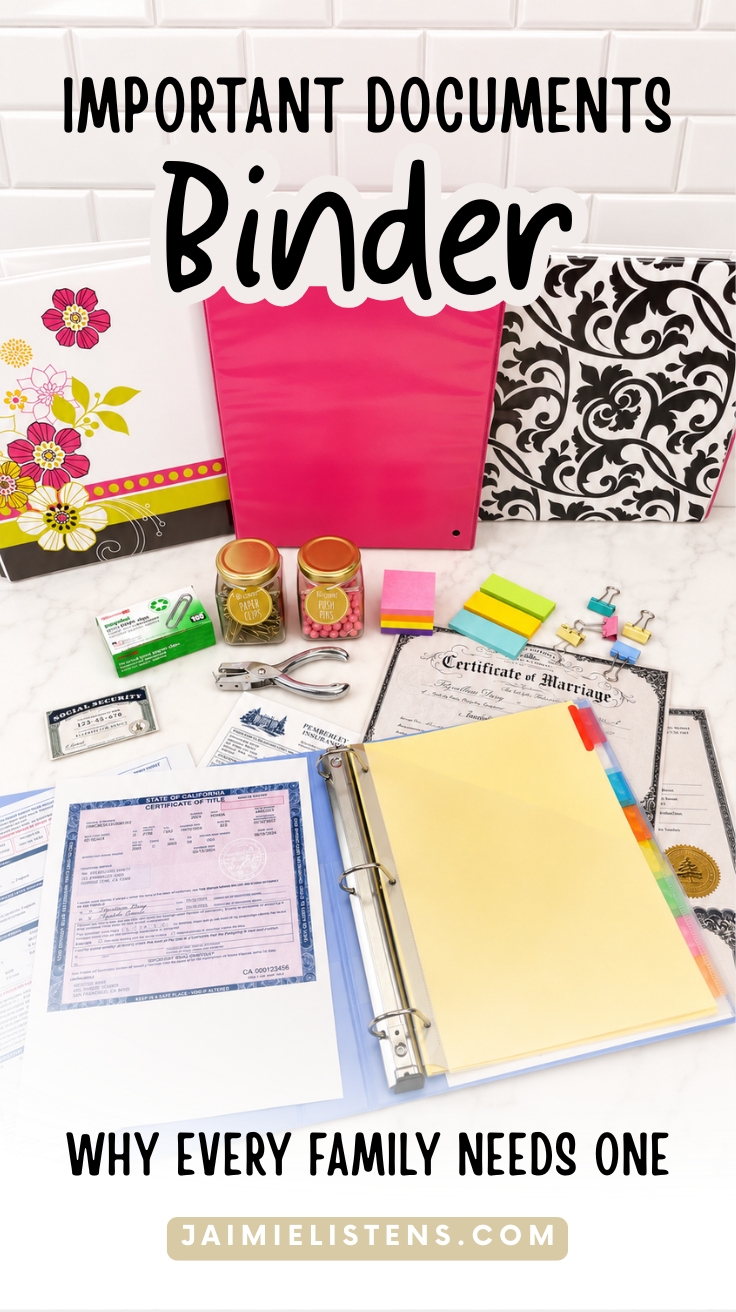
Most important documents spend years doing absolutely nothing.
They sit in a file cabinet, desk drawer, safe, or folder waiting for the day you need them.
The problem is that when that day arrives, you usually need them quickly.
You may need paperwork for:
- Medical emergencies
- Insurance claims
- Travel requirements
- Estate matters
- School enrollment
- Vehicle sales or purchases
- Tax questions
- Financial accounts
An important documents binder gives those records a designated home so you aren’t trying to remember where you put something five years ago.
The goal isn’t to create a beautiful binder or a perfect filing system. The goal is to make important information easier to find when life gets busy, stressful, or unexpected.
Because having a document and being able to find a document are two very different things.
Important Documents Binder Rules That Are Non-Negotiable
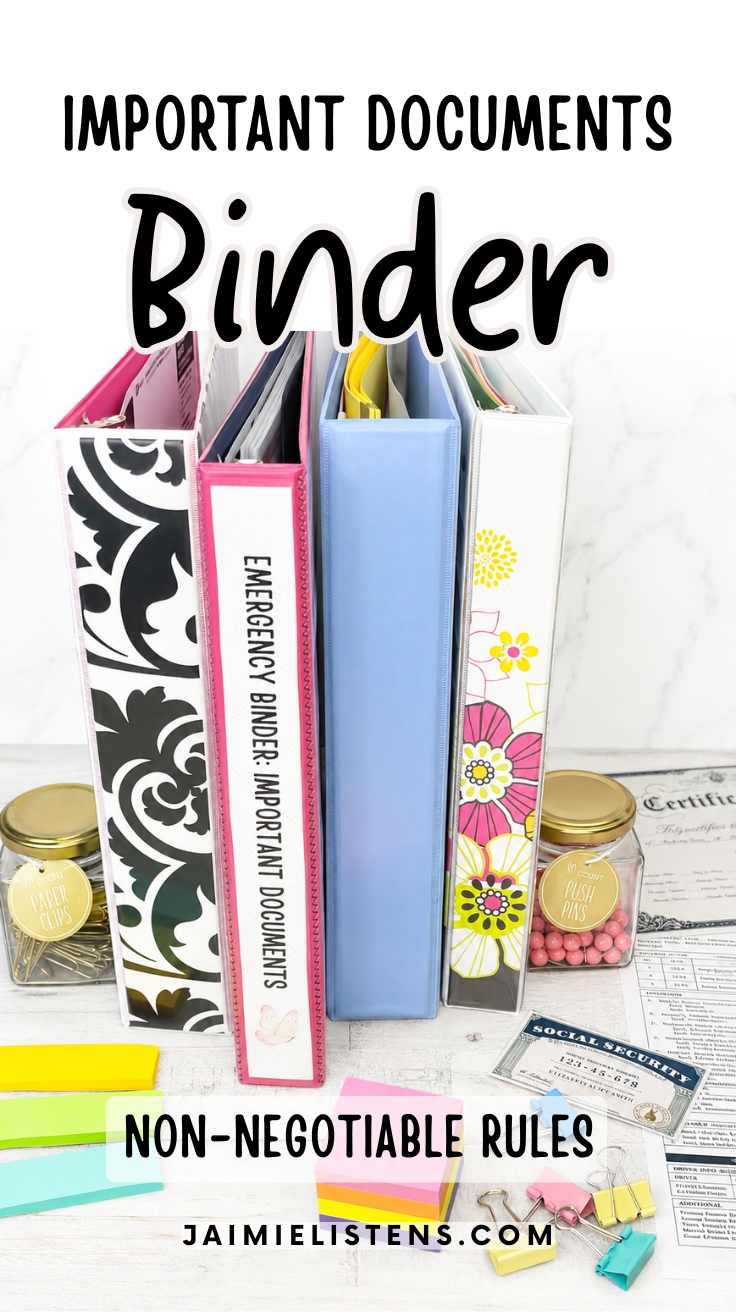
Before we talk about what goes inside your important documents binder, we need to talk about the binder itself.
After years of organizing paperwork, I’ve developed a few strong opinions about binders. Some of them may sound ridiculous until you’ve spent twenty minutes looking for a document that disappeared into a poorly designed binder.
These are the binder rules I refuse to compromise on.
Rule #1: Never Buy a Binder with the Rings Attached to the Spine
The rings should be attached to the back cover, not the spine.
When the rings are attached to the spine, papers tend to roll, shift, and become difficult to turn, especially as the binder fills up. Binders with rings attached to the back cover lay flatter and are much easier to use.
It should be illegal to attach the rings to the spine, but apparently nobody asked me.
Rule #2: The Cover and Spine Should Hold Labels
A good binder should allow you to slide an 8.5 x 11 inch sheet of paper into the front cover and a label into the spine.
If the clear plastic cover is completely sealed, you got ripped off.
If there is no clear plastic cover at all, you got double ripped off.
Being able to label the cover and spine makes it much easier to identify the binder when it’s sitting on a shelf with other projects.
Rule #3: Binder Size Matters
For most families, a 1-inch binder is the minimum size I would consider.
A 1.5-inch binder is usually the sweet spot and my personal favorite.
Once you get much larger than 2 inches, the binder starts becoming difficult to handle. Pages become harder to turn, the binder gets heavier, and it often becomes a dumping ground for paperwork that should probably be organized elsewhere.
If your binder is overflowing, don’t buy a bigger binder.
Buy a second binder.
Rule #4: Use Closing Pockets When Possible
If you use pocket dividers or sheet protectors with pockets, choose versions that close whenever possible.
Open pockets seem like a great idea until the binder gets tipped over and all the contents slide out in a giant paperwork avalanche.
Small documents are especially good at escaping.
Anything that helps keep papers contained is worth considering.
Rule #5: The Inside Cover Pockets Are Mostly Useless
The pockets inside the front and back covers look useful, but I rarely trust them with anything important.
They’re fine for temporary papers, notes, or documents you’re actively working with.
For long-term storage, they tend to become a holding area for random paperwork that doesn’t have a proper home.
Rule #6: Be Skeptical of Cheap “Fireproof” Binders
If a zippered binder online claims to be fireproof, waterproof, indestructible, and costs less than dinner for two, proceed with caution.
Important documents are not something I like to gamble with.
If you’re considering specialty storage products, look for companies that specialize in document protection and verify their claims before trusting them with irreplaceable records.
Rule #7: Keep It Secret, Keep It Safe
Your important documents binder may contain personal information, financial records, insurance information, identification documents, and other sensitive paperwork.
Don’t leave it sitting out where visitors, contractors, or curious family members can flip through it.
If you have a fireproof safe large enough to hold the binder, that’s a great option.
At the very least, keep it stored somewhere secure and out of sight.
How to Organize the Inside of Your Important Documents Binder
Once you have the binder itself sorted out, it’s time to organize the documents inside.
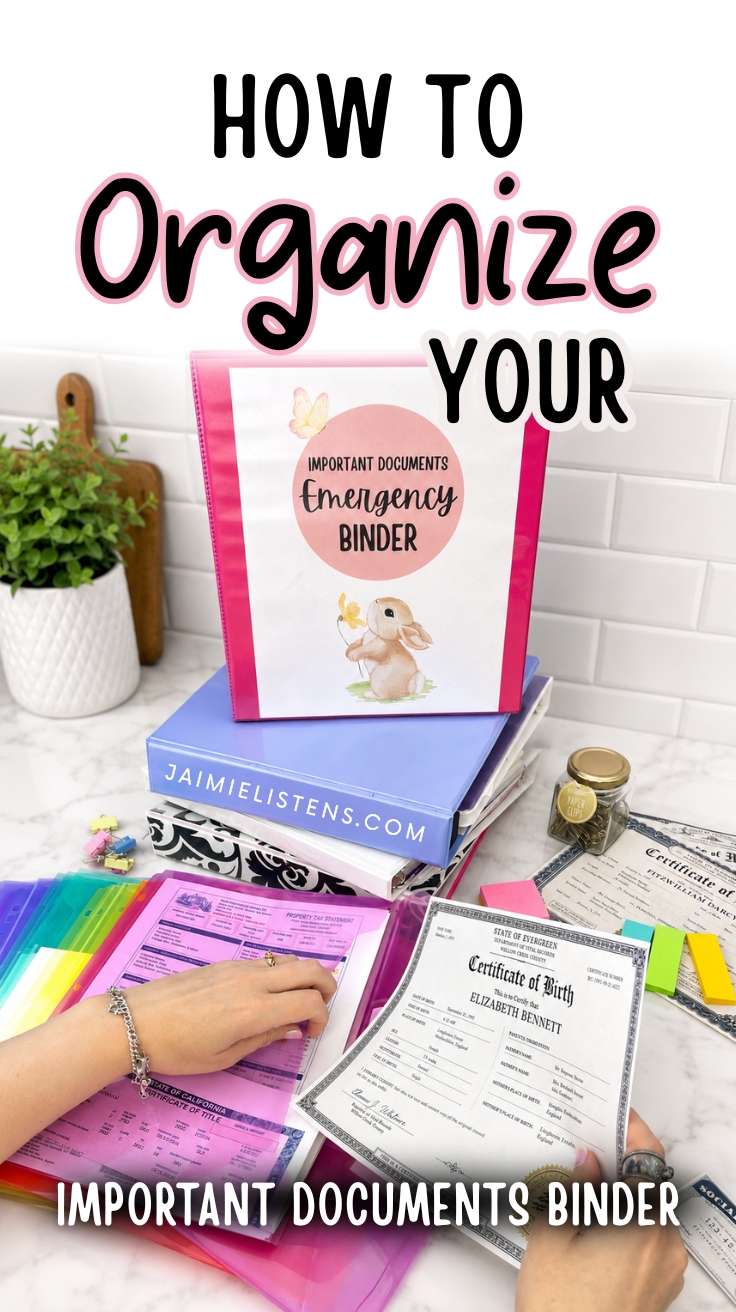
The goal isn’t to create a Pinterest-perfect binder that nobody wants to touch. The goal is to create a system that helps you find important paperwork quickly when you need it.
Keep Identification Documents Together
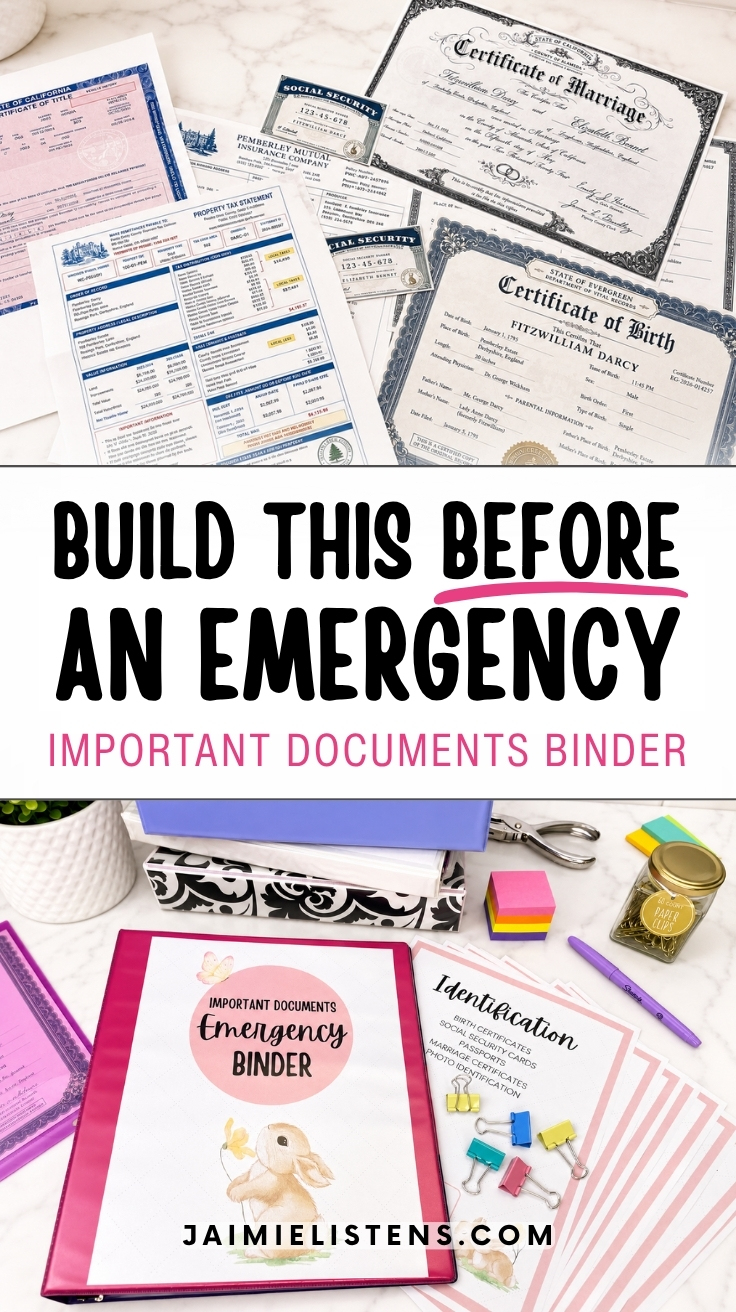
I like to keep identification documents together in one secure pouch or envelope with a closure.
Smaller items are surprisingly easy to lose inside large pockets and sheet protectors. A dedicated envelope helps keep everything in one place and prevents important documents from sliding around.
Examples include:
- Birth certificates
- Social Security cards
- Passports
- Marriage certificates
- Adoption paperwork
- Citizenship documents
- Name change documents
Organize the Rest by Topic, Asset, or Job
After the identification section, group documents based on what they relate to.
For example:
- Insurance
- Medical Records
- Property Records
- Vehicle Records
- Financial Accounts
- Estate Planning
- Emergency Contacts
There is no single correct way to do this. The best system is the one that makes sense to you and allows you to find information quickly.
Not Sure Which Documents Belong in Your Binder?
Before you spend time organizing paperwork, make sure you’re gathering the right documents in the first place.
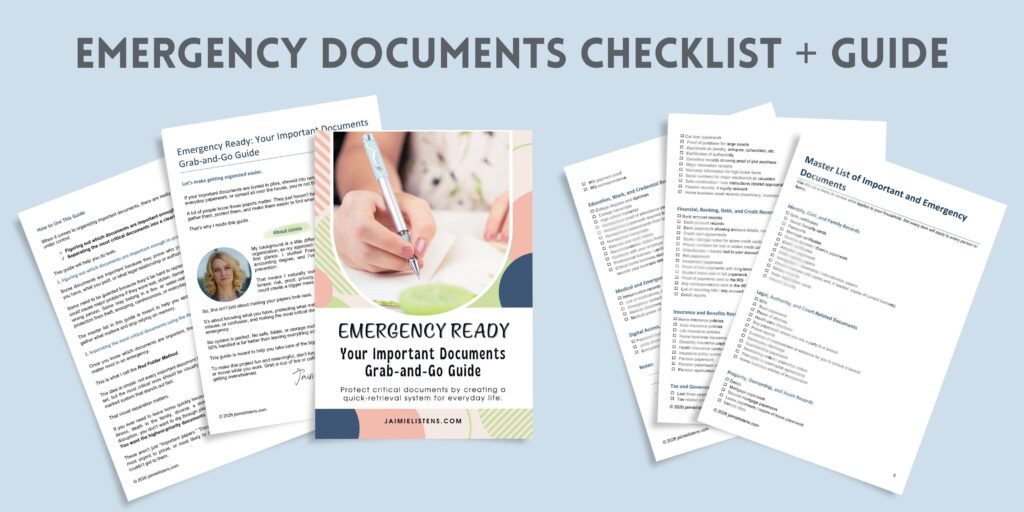
That’s why I created the free Emergency Ready Important Documents Checklist.
It walks you through the records many families forget about so you can identify the documents that matter most and build your binder with confidence.
Use Paper Clips to Create Subsections
Paper clips are one of the most underrated organizing tools.
If a property, vehicle, insurance policy, or financial account has multiple pages, clip those related documents together.
This creates smaller groups inside larger sections and makes it much easier to find what you’re looking for.
Use Sticky Notes to Improve Retrieval
Not every document is easy to identify at a glance.
Some have tiny print. Others hide the important information halfway down the page.
A simple sticky note can save a surprising amount of time. Add a short note explaining what the document is or why you kept it.
Future You will appreciate the help.
Build for Retrieval, Not Appearance
A beautiful binder is nice.
A binder that helps you find a document in less than five minutes is better.
When organizing your binder, focus on making information easy to access rather than making everything look perfect.
A Few Things Most People Forget
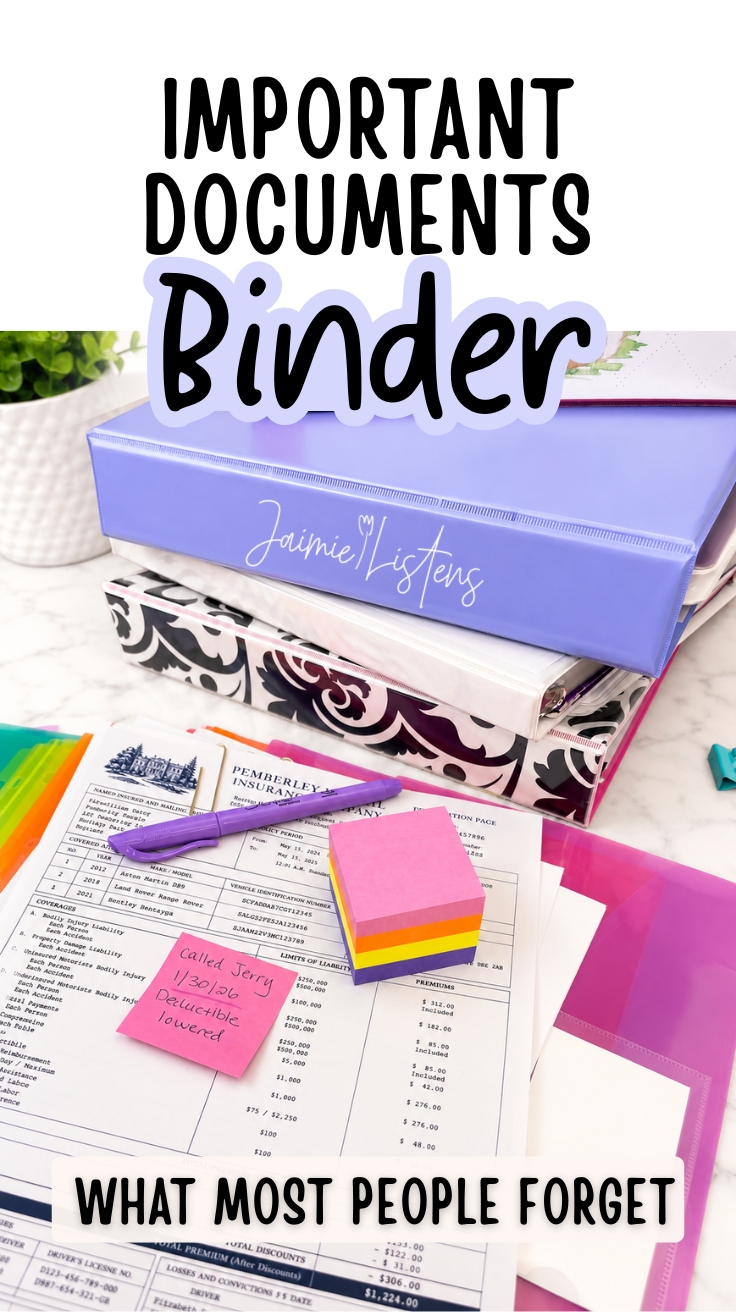
Creating an important documents binder is a great start, but there are a few details that can make the difference between a binder that works and a binder that creates new problems.
Keep Backup Insurance Cards
If your insurance company provides multiple cards, consider keeping an extra set in your binder.
That way, if a wallet gets lost or a card gets damaged, you still have the information you need to access your policy.
Consider Ordering Multiple Certified Copies
Some documents are easier to obtain when you’re already going through the process.
For example, if you need a certified copy of a birth certificate, consider ordering more than one.
The same principle applies to other certified records that may be difficult, time-consuming, or expensive to replace later.
Having a backup copy can save a lot of frustration down the road.
Think About Originals vs. Copies
Not every document needs to live in your binder.
Some people prefer to keep original documents in a fireproof safe and place copies in the binder instead.
Others keep a combination of originals and copies.
Choose the approach that makes the most sense for your family, but make sure you know where the originals are stored.
Consider Off-Site Storage
For especially important records, some families choose to keep backup copies in another location.
This could be a safe deposit box, a trusted family member’s home, or another secure location.
The right solution depends on your situation, but it is worth thinking about before an emergency happens.
Review Your Binder Once a Year
- Paperwork changes.
- Insurance policies change.
- Beneficiaries change.
- Addresses change.
- Accounts get opened and closed.
Set a reminder to review your binder at least once a year so the information stays current and useful.
A binder full of outdated information is still organized, but it may not be very helpful.
Don’t Forget the Documents Themselves
An important documents binder can make paperwork easier to find, easier to maintain, and easier to access when you need it.
But before you start filling a binder with tabs, dividers, and sheet protectors, make sure you’re gathering the right documents in the first place.
That’s where many people get stuck.
Some families are missing important records. Others have them but don’t know where they are. And some documents are easy to overlook until a medical emergency, insurance claim, travel requirement, or family crisis suddenly makes them important.
That’s why I created the free Emergency Ready Important Documents Checklist.
It will help you identify the records that matter most so you can gather them, organize them, and build your important documents binder with confidence.
Grab your free Emergency Ready Important Documents Checklist below.
Because when life gets complicated, the last thing you want is a paperwork scavenger hunt.
Build the System Before You Need It
Most important documents spend years sitting quietly in the background.
Then one day, a doctor’s office needs a record. An insurance company asks for documentation. A family member needs information. A government agency wants proof of something that happened years ago.
That’s usually not the moment you want to start organizing paperwork.
An important documents binder won’t prevent emergencies, but it can make them easier to navigate. Instead of wondering where something might be, you’ll know where to look.
Start simple. Gather the documents you already have. Create a few categories. Give important paperwork a designated home.
You don’t need a perfect system to get started.
You just need a system that’s better than, “I know it’s here somewhere.”
And when the day comes that you need an important document quickly, you’ll be glad you took the time to put one together.
AI Disclosure: This post was created with the assistance of AI tools for brainstorming, editing, and organization, which helps me manage chronic pain and physical limitations during long writing sessions. All content is based on my real-life experience and is reviewed and edited by me. Some or all images in this post may be AI-generated for illustration and inspiration. Learn more about how I use AI here.
Disclaimer: Jaimie is not the great and powerful Wizard of Oz, a lawyer, a doctor, a veterinarian, or a CPA. Nothing you read in my blog is a substitute for professional advice and doing your own good research. Remember that just because someone has credentials doesn’t guarantee their advice is golden or perfect. Put your smart hat on and do your due diligence. Good luck!

Leave a Reply