
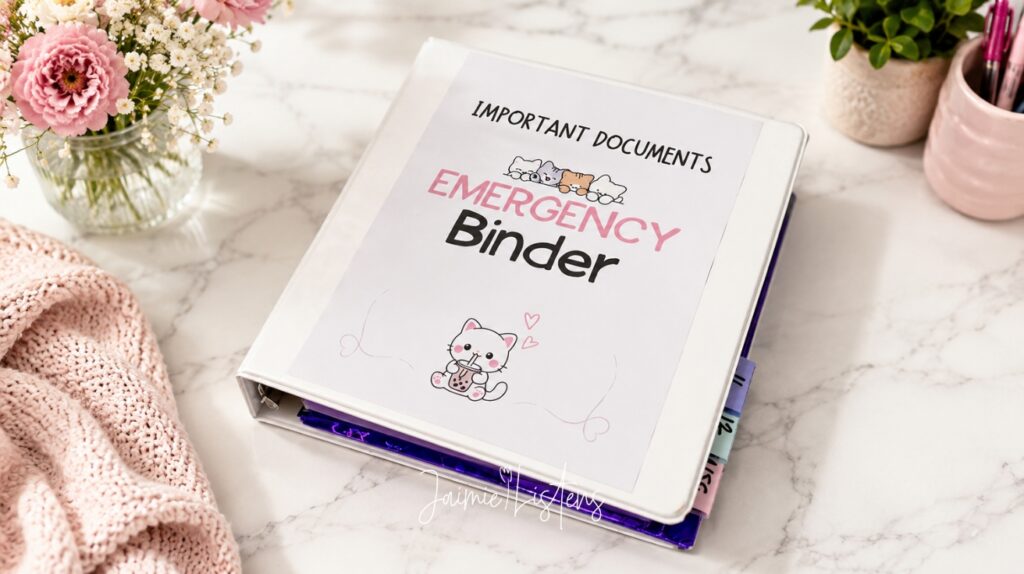
A couple of weeks ago, a wildfire just a few miles from our home destroyed houses, forced thousands of people to evacuate, and reminded our entire community how quickly life can change. Many families had only minutes to leave because of the high winds.
It got me thinking about emergency preparedness in a different way.
Most emergency preparedness checklists focus on things like food, water, flashlights, and first aid kits. Those things absolutely matter. But one item is often reduced to a single bullet point: important documents.
The problem is, “important documents” sounds simple until you actually have to figure out which ones those are, where they are, and whether you’ve already gathered everything your family might need.
That’s why I created this free Important Documents Checklist. Instead of overwhelming you with hundreds of pages of forms and worksheets, it helps you start with the foundation of every emergency binder: identifying the documents that matter most.
Once you know you have the right documents gathered and protected, you can always expand your emergency binder with emergency contacts, medical information, family plans, and other preparedness resources later.
Because when an emergency happens, the last thing you want is to wonder where your paperwork is.
Emergency Binder Free Printables: Start With the Most Important Documents
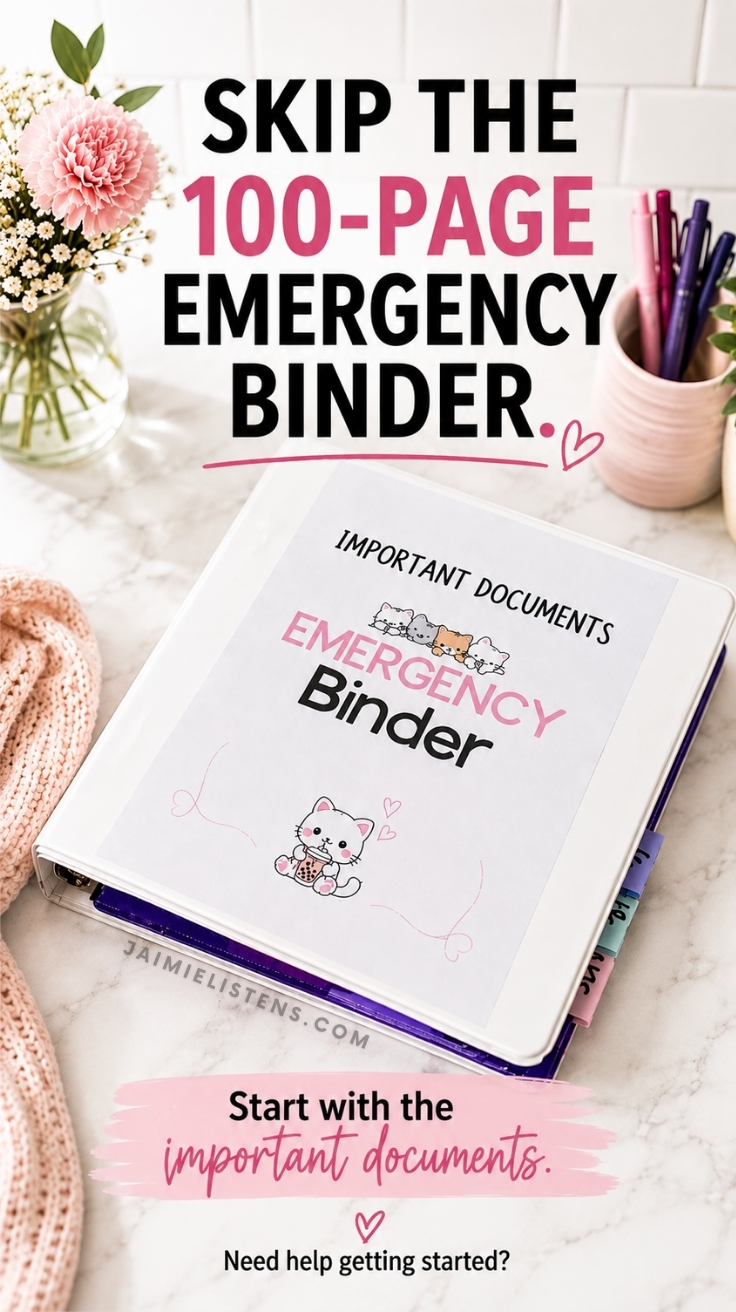
If you’ve been searching for free printables to help you start and organize your emergency binder, you’ve probably found everything from simple checklists to massive binder systems with dozens of worksheets. While those can be helpful, they can also feel like another project to manage.
The truth is that an emergency binder can include many different things. Some families keep emergency contacts, medical information, pet records, evacuation plans, and preparedness checklists all in one place. Those are all worthwhile additions.
Before you worry about filling out page after page of forms, though, make sure you have the foundation in place. Your birth certificates, insurance policies, passports, wills, property records, and other important documents are often the hardest things to replace and the most difficult to gather after an emergency.
That’s why this free printable focuses on your important documents first. Once you know you have the records that matter most, adding the rest of your emergency binder becomes much easier.
Think of it as building your binder from the ground up. Start with the documents that already exist, then add the information and planning pages that make the most sense for your family.
What Is an Emergency Binder?
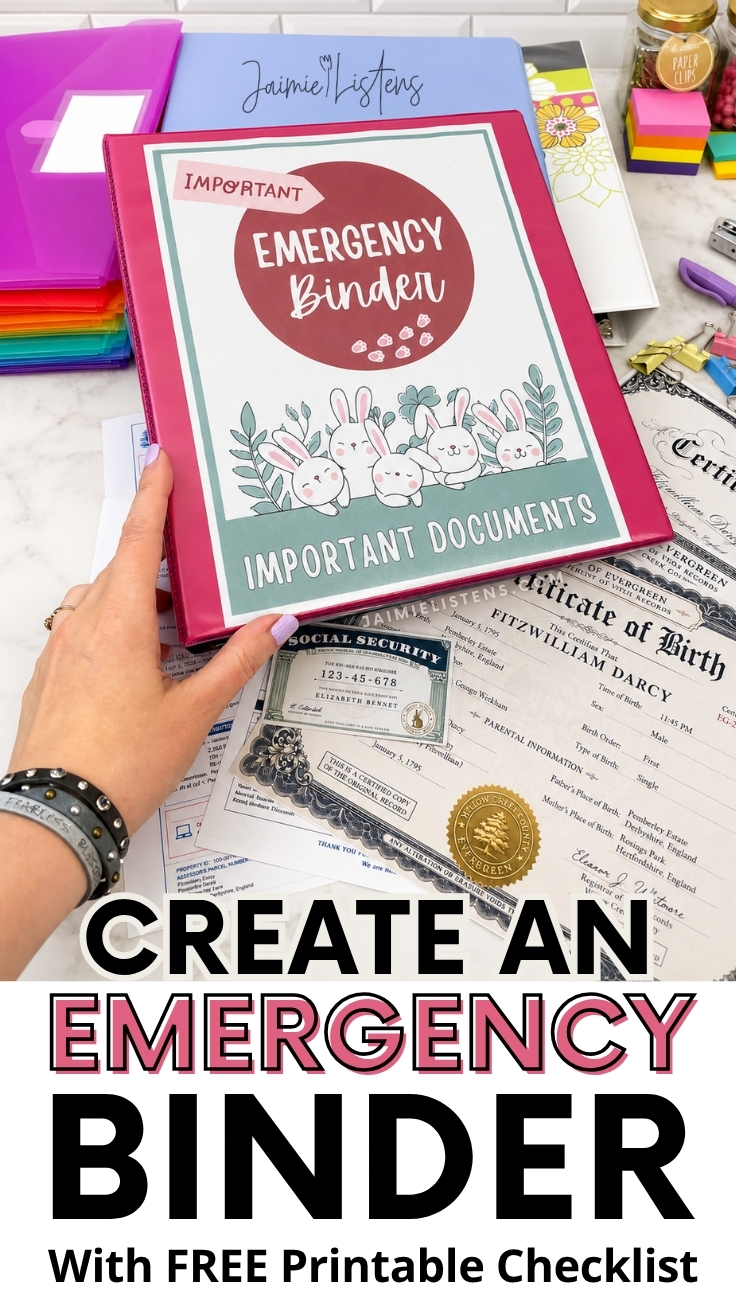
An emergency binder is a central place to keep the information your family may need during an emergency or other unexpected event. Depending on the family, it might include important documents, emergency contacts, medical information, pet records, insurance information, family communication plans, and a few basic preparedness checklists.
The goal isn’t to prepare for every possible disaster or create another binder full of paperwork to maintain. It’s to gather the information that would be the most difficult to replace or remember when you’re under stress.
Think of your emergency binder as your household’s emergency operations manual. If you suddenly had to leave your home, were hospitalized, or someone else needed to step in and help your family, this binder could provide the documents and information they need to make important decisions.
For many families, the most valuable part of an emergency binder is the document section. Once you know where your important records are and have them organized, it’s much easier to add other information over time as your family’s needs change.
Don’t Turn Your Emergency Binder Into Another Project
As I looked through emergency binders and the free printables people were sharing, I noticed that many of them included dozens of worksheets, trackers, and forms to fill out. Some even had hundreds of pages.
If that level of detail helps you feel prepared, that’s wonderful. For many people, though, it can feel overwhelming before they’ve even started.
Even though I appreciate a thorough system, staring at hundreds of printables makes my brain shut off. When I am trying to get prepared, the last thing I need is a printer marathon and a brand-new stack of homework.
The good news is that you don’t have to build the perfect emergency binder all at once.
Many of the most important things belong in your binder already exist. Your birth certificate already exists. Your homeowner’s insurance policy already exists. Your will, vehicle title, pet vaccination records, and other important documents already exist.
Instead of spending hours copying information from one piece of paper to another, start by gathering the records you already have. Make sure they’re complete, easy to find, and protected.
Once your important documents are in place, you can gradually add emergency contacts, medication lists, pet information, family communication plans, or other preparedness pages if they’re helpful for your family.
The best emergency binder isn’t the one with the most pages. It’s the one you’ll actually finish, keep updated, and be able to grab when you need it.
What Documents Should Every Emergency Binder Include?
Every family is a little different, but there are some documents that almost everyone should know how to find during an emergency.
That includes things like personal identification, insurance information, financial records, property documents, medical paperwork, and estate planning documents. Depending on your situation, you may also want records for your children, pets, military service, or business.
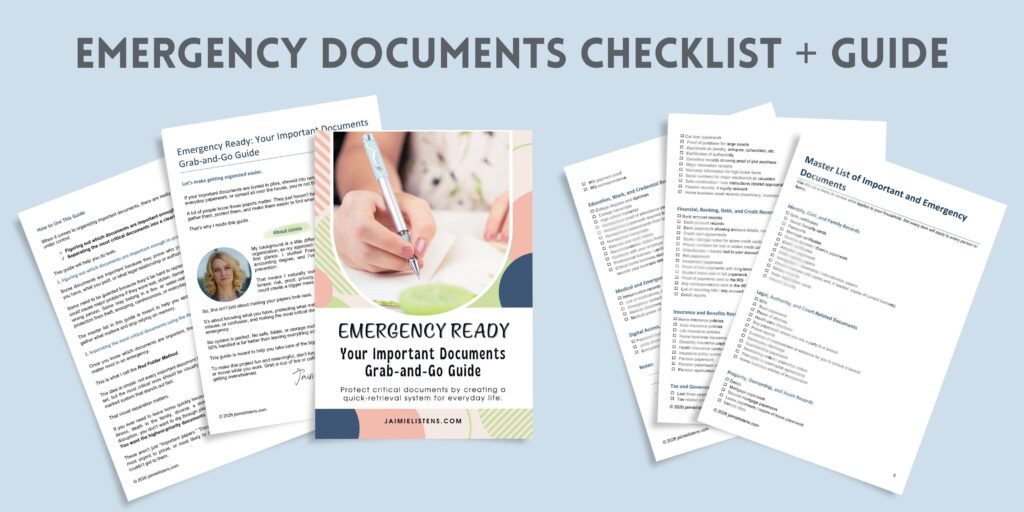
Rather than trying to remember everything on your own, I created a free Important Documents Checklist to help you identify the records your family may need. It’s designed to jog your memory, help you spot any gaps, and give you a simple starting point without feeling overwhelming.
Whether you’re building an emergency binder, organizing your household paperwork, or simply trying to be more prepared, this checklist can help you gather the documents that matter most before you need them.
Download your free Emergency Ready Important Documents Checklist below and start checking off the documents you already have. You may be surprised by a few you haven’t thought about in years.
What Else Can You Include in an Emergency Binder?
Once you’ve gathered your important documents, you can always expand your emergency binder to fit your family’s needs.
Many families choose to include emergency contacts, medication lists, pet information, family communication plans, and simple preparedness checklists. Some also add copies of identification, maps, evacuation routes, or a list of items to grab if they only have a few minutes to leave.
The right emergency binder is the one that works for your family. Someone who lives in a wildfire-prone area may include different information than someone who worries about hurricanes, flooding, or severe winter storms.
You don’t have to include everything on day one. Start with the documents that matter most, then add other sections as your needs change. Building your emergency binder one step at a time is far more manageable than trying to create the perfect system all at once.
Build Your Emergency Binder One Step at a Time
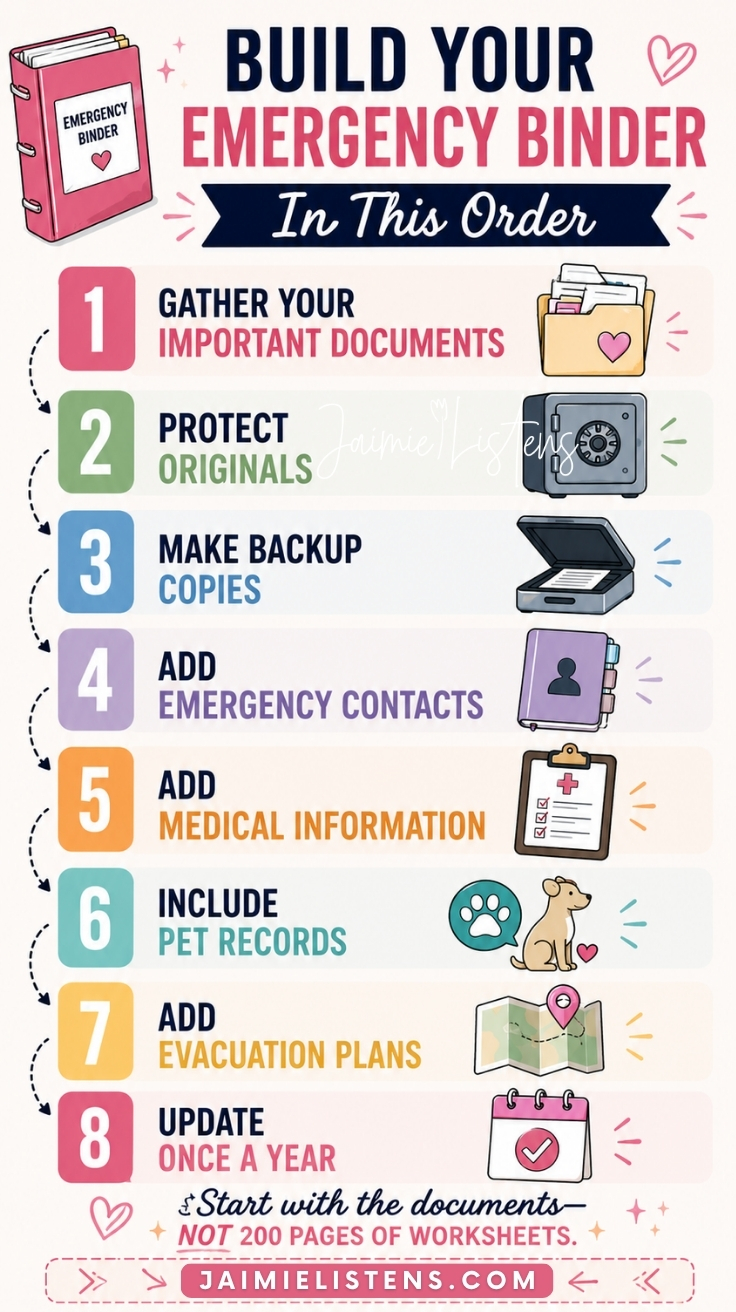
Emergency preparedness isn’t about having the biggest binder or the most printables. It’s about making thoughtful decisions before you need to make them under pressure.
If you only do one thing today, start by gathering your important documents. Knowing what you have, where it is, and being able to find it quickly can save valuable time and reduce stress when life takes an unexpected turn.
Once your document section is complete, you can continue building your emergency binder over time by adding emergency contacts, medical information, family plans, and other resources that make sense for your household.
Every small step you take today is one less thing you’ll have to worry about during an emergency.
If you haven’t already, download the free Emergency Ready Important Documents Checklist below. It’s a simple way to identify the records your family should have and take the first step toward building an emergency binder you’ll actually use.
Disclaimer: Jaimie is not the great and powerful Wizard of Oz, a lawyer, a doctor, a veterinarian, or a CPA. Nothing you read in my blog is a substitute for professional advice and doing your own good research. Remember that just because someone has credentials doesn’t guarantee their advice is golden or perfect. Put your smart hat on and do your due diligence. Good luck!
AI Disclosure: This post was created with the assistance of AI tools for brainstorming, editing, and organization, which helps me manage chronic pain and physical limitations during long writing sessions. All content is based on my real-life experience and is reviewed and edited by me. Some or all images in this post may be AI-generated for illustration and inspiration. Learn more about how I use AI here.

Leave a Reply