
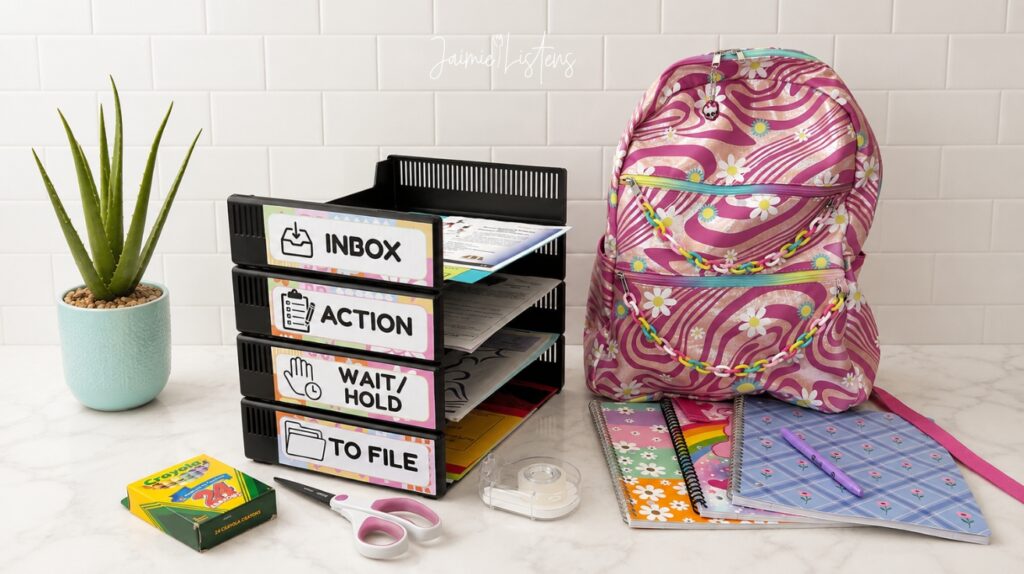
Back-to-school season is exciting, but let’s be honest. School paper organization probably isn’t the first thing on your mind. Between school supply shopping, buying clothes that actually fit, replacing backpacks that survived last year by sheer luck, signing kids up for sports, and getting everyone back on a normal sleep schedule, there’s a lot to do before that first day of school.
The first week can be a little rough, too. Kids have been operating on summer mode, staying up late and sleeping in. Suddenly everyone has to be out the door on time, and it takes a while to find that rhythm again. As a parent, I always looked forward to having a routine back. My daughter was back in school, life felt a little more predictable, and I could finally hear myself think for a few hours.
What I didn’t look forward to was the mountain of paperwork.
Permission slips. Fundraisers. Homework. Reading logs. Sports forms. Teacher notes. Field trip information. School pictures. It seemed like every afternoon another stack of papers came home, and every one of them needed me to do something.
To make things even more interesting, my daughter wasn’t exactly the world’s most reliable courier. I once taped a reminder to the bathroom mirror that simply said, “Cassi! Put on pants!” That should give you an idea of what I was working with.
Half the papers that were supposed to come home never made it, and the ones that did didn’t always make it back to school. Honestly, I think a flock of homing pigeons, or maybe the owls from Harry Potter, would have been a more dependable communication system.
That’s why I needed a simple school paper organization system. Not another complicated binder or filing cabinet, but an easy way to keep papers moving instead of piling up. The less time I spent wondering what to do with each piece of paper, the less stress landed on my shoulders. It also meant fewer last-minute searches for permission slips and fewer frantic mornings trying to figure out what needed to go back to school.
The Secret to School Paper Organization Isn’t More Bins. It’s Knowing Where Every Paper Belongs.
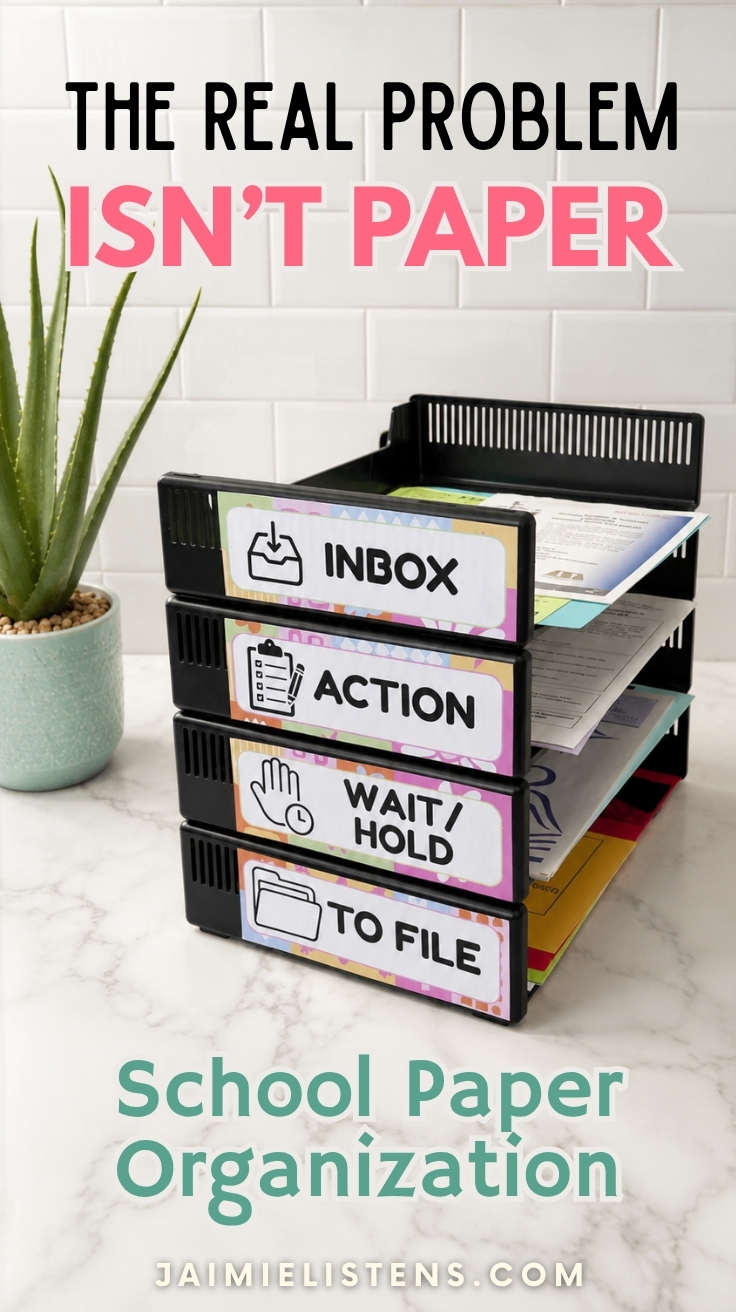
If you’ve ever searched Pinterest for school paper organization, you’ve probably seen beautiful filing cabinets, rainbow-colored folders, and enough labeled bins to organize a small office. They look great, but they don’t solve the biggest problem.
The real problem isn’t where to store school papers.
The real problem is deciding what to do with each piece of paper the moment it comes through the door.
Should you sign it?
Does it go back to school?
Do you save it forever?
Can you recycle it?
Every paper asks you to make another decision. After a long day of work, making dozens of little decisions is exhausting. Before you know it, the kitchen counter becomes your filing system simply because it’s easier to deal with it later.
Imagine your child walks in the door and hands you a permission slip, a spelling test, a fundraiser packet, a drawing of your family, and a reminder about school pictures. None of those papers belong in the same place, but they also shouldn’t stay in one pile.
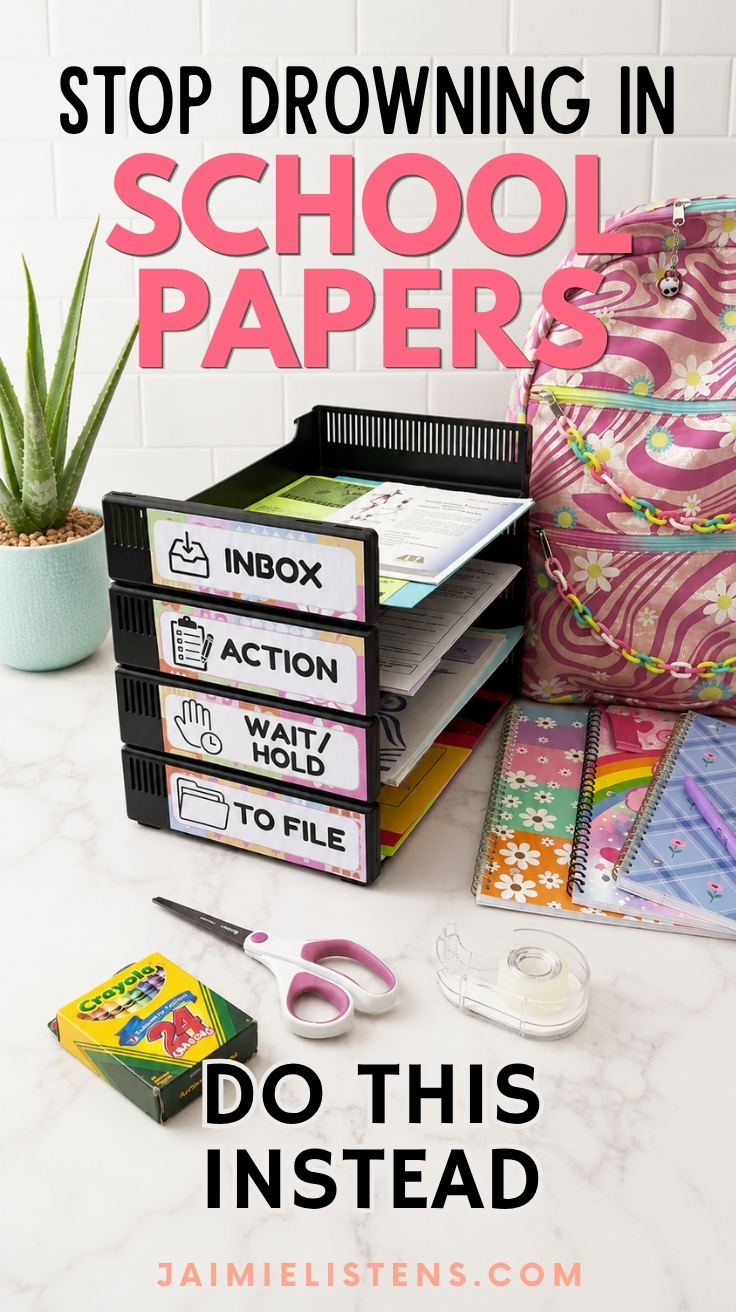
That’s exactly why I created the Kids 4×4 Paper System. Instead of wondering where every paper belongs, you simply move it through the same four-step workflow every time. Once it’s ready to file, it has one permanent home. No guessing, no paper piles, and no wondering where that permission slip disappeared to.
Start with the Kids 4×4 Paper System Before You File a Single Paper
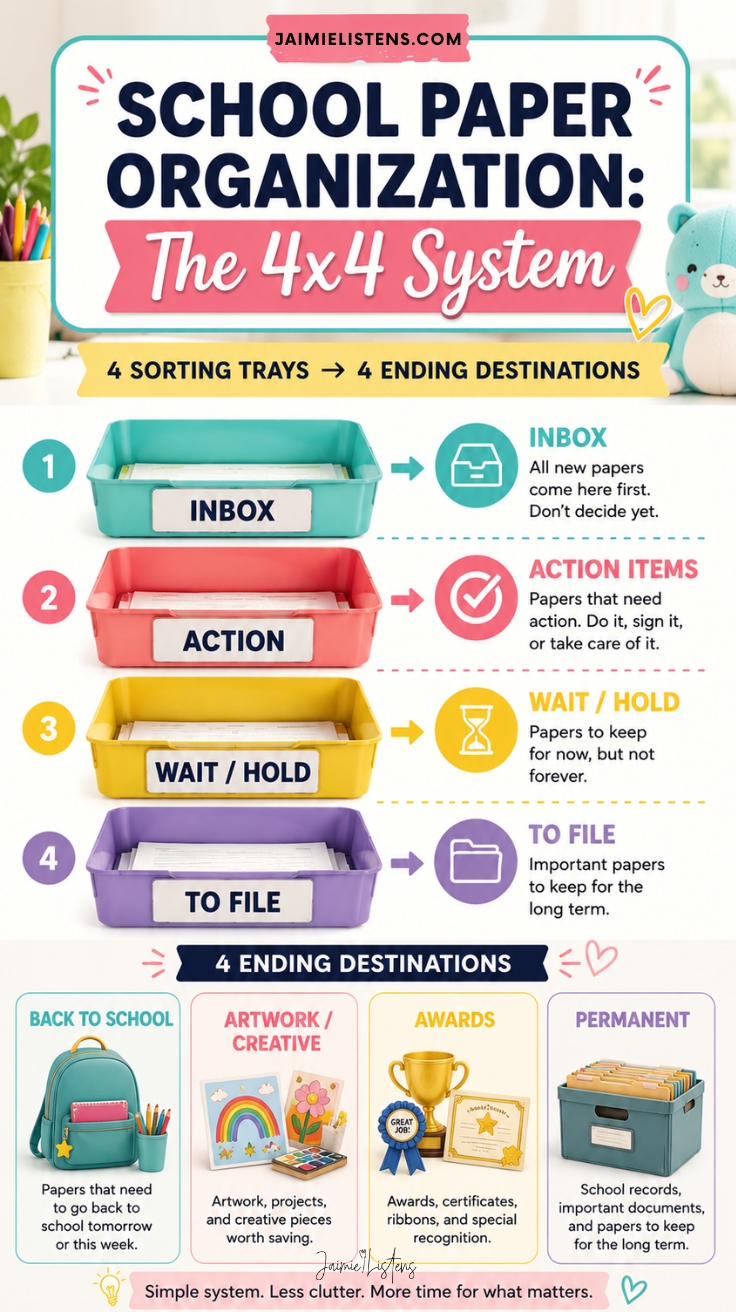
The Kids 4×4 Paper System keeps school papers moving instead of piling up. Before you decide what to save, every paper follows the same simple path. Once your child understands the system, they can help sort papers as they come home. Younger children will probably need your help at first, but that’s okay. Explaining what you’re doing and letting them participate is a great way to teach organization skills that will serve them well as adults.
📥 Inbox
The Inbox is the landing spot for every paper that comes home from school. Homework, permission slips, artwork, newsletters, and certificates all go here first. This keeps papers from getting scattered across the kitchen counter, dining table, or buried at the bottom of a backpack.
If your child is old enough, make it their job to empty their backpack into the Inbox every afternoon. One simple habit can prevent a lot of lost papers.
✔️ Action Items
Anything that requires someone to do something belongs here.
This might include:
- Permission slips to sign
- Homework to finish
- Reading logs
- Forms to complete
- Field trip payments
- Teacher notes that need a response
The goal is simple. If a paper requires action, it shouldn’t disappear into a pile where everyone forgets about it.
⏳ Wait / Hold
Some papers don’t need immediate attention, but they aren’t ready to file either.
Examples include:
- Ongoing school projects
- Event information you’ll need later
- Forms waiting for a future date
- Papers waiting for another family member
Keeping these items together makes them easy to find when the time comes.
📁 To File
Once a paper has finished its job, it’s ready for its permanent home.
Some papers will go back to school. Others become keepsakes, artwork, or permanent school records. The important thing is that they don’t stay in the active workflow once you’re finished with them.
If your children are old enough, let them help decide which of the four bins each paper belongs in. Ask questions like, “Does this need us to do something?” or “Is this finished?” Even if you guide the conversation, you’re helping them learn how to think through decisions instead of simply telling them where to put things.
You’re doing more than organizing school papers. You’re teaching your kids a practical life skill they’ll use long after they graduate.
Create a “Goes Back to School” Station to Stop the Morning Scramble
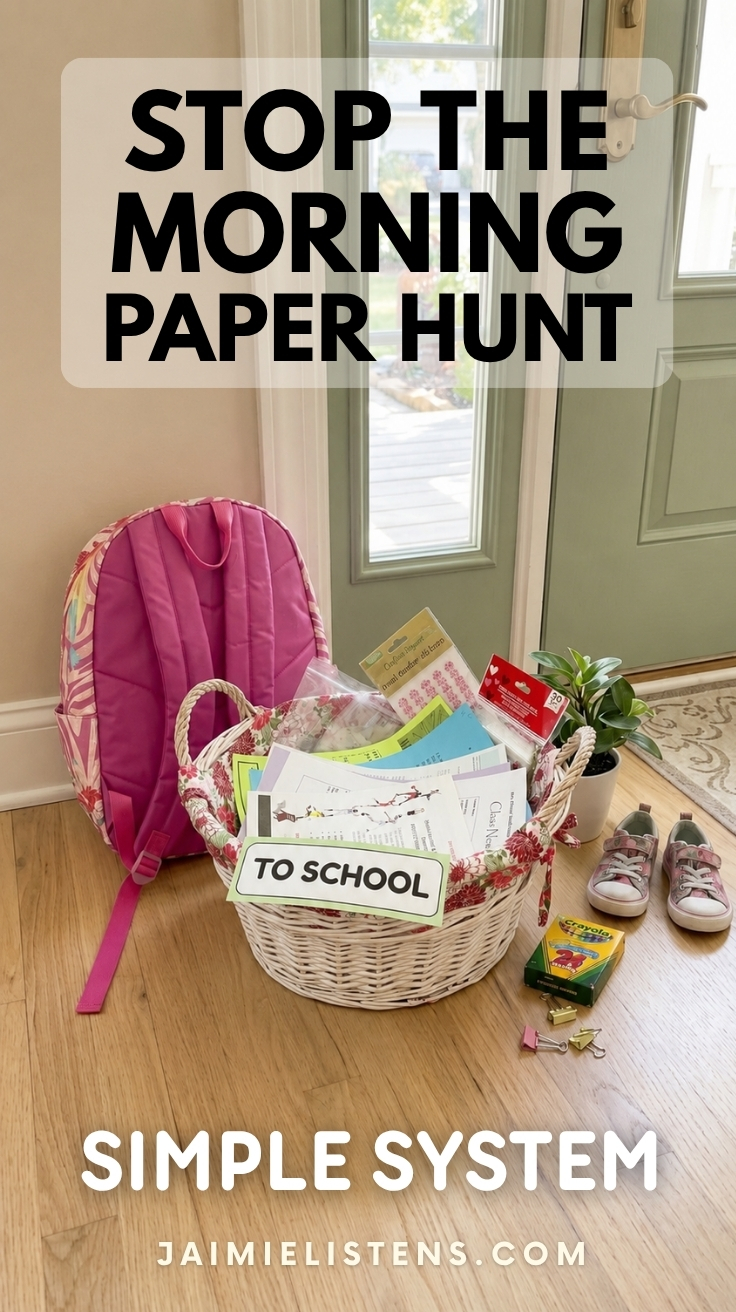
Some school papers only have one job. They need to make it back to school.
Instead of dropping completed homework, signed permission slips, library books, and other return items on the kitchen counter, give them a dedicated home near the front door or wherever your kids keep their backpacks.
I like using an open bin or basket for each child with their name clearly labeled on the front. If you have younger children or several kids, make each one easy to recognize with a different color, fun stickers, or a favorite character. A quick visual cue helps everyone know exactly where their papers belong.
When it’s time to leave for school, anything in that child’s bin goes straight into their backpack. No searching the house, or wondering where the permission slip ended up. No frantic dash through a stack of papers five minutes before the bus arrives.
If your kids are old enough, make this part of their daily routine. Before they head out the door, they check their “Goes Back to School” bin and pack anything waiting for them. It only takes a few seconds, but it teaches responsibility while making mornings a little less chaotic.
Organize Kids’ Artwork and Creative Projects Without Keeping Everything
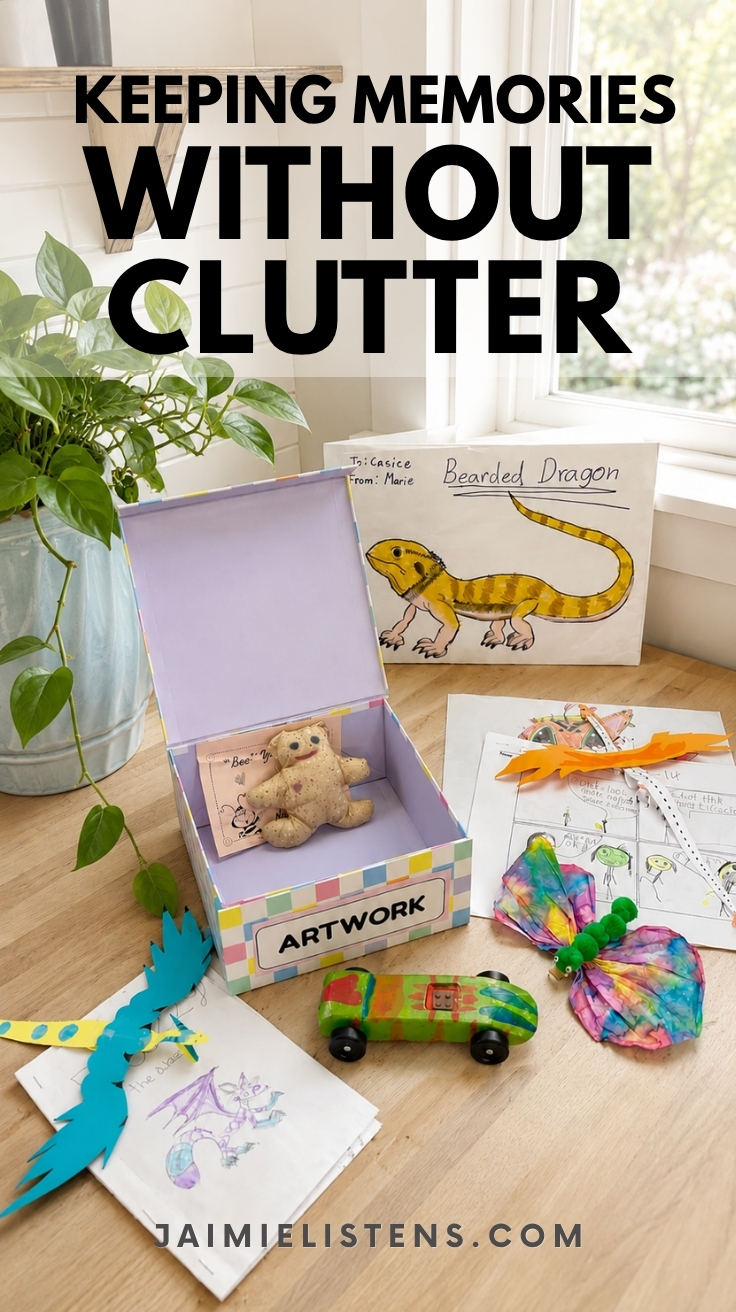
This is one of my favorite parts of the Kids 4×4 Paper System because it gives you permission to keep the memories without keeping every single piece of paper.
With younger kids, sit down together and go through their artwork, stories, creative writing, and projects. Ask them which ones they’re most proud of and tell them why you’re saving a few special pieces instead of everything. It’s a great opportunity to teach them that organization isn’t about throwing things away. It’s about keeping the things that matter most.
Once kids are a little older, let them make the first pass. Have them choose what they’d like to keep, then hand you the discard pile for one final review. I was a kid once, and I got rid of a few things I wish I’d kept. Parents have their favorites, too.
I still have notes my friends and I passed between classes, you know, before every kid had a cell phone in each hand. I even have a few original Garbage Pail Kids cards from the ’80s. At the time, they were just ordinary parts of growing up. Today, they’re little time capsules that make me smile.
If you’re drowning in artwork and projects, don’t forget that technology is on your side. Some of those amazing science fair projects, cardboard castles, and oversized creations are simply too big to keep forever. Snap a few good photos or scan favorite artwork before letting it go. You’ll still have the memory without needing an entire closet to store it.
The goal isn’t to save every worksheet that comes home. It’s to save enough that, years from now, you can look through the collection and remember who your child was at each stage of life.
Save Awards and Keepsakes That Will Matter Years from Now
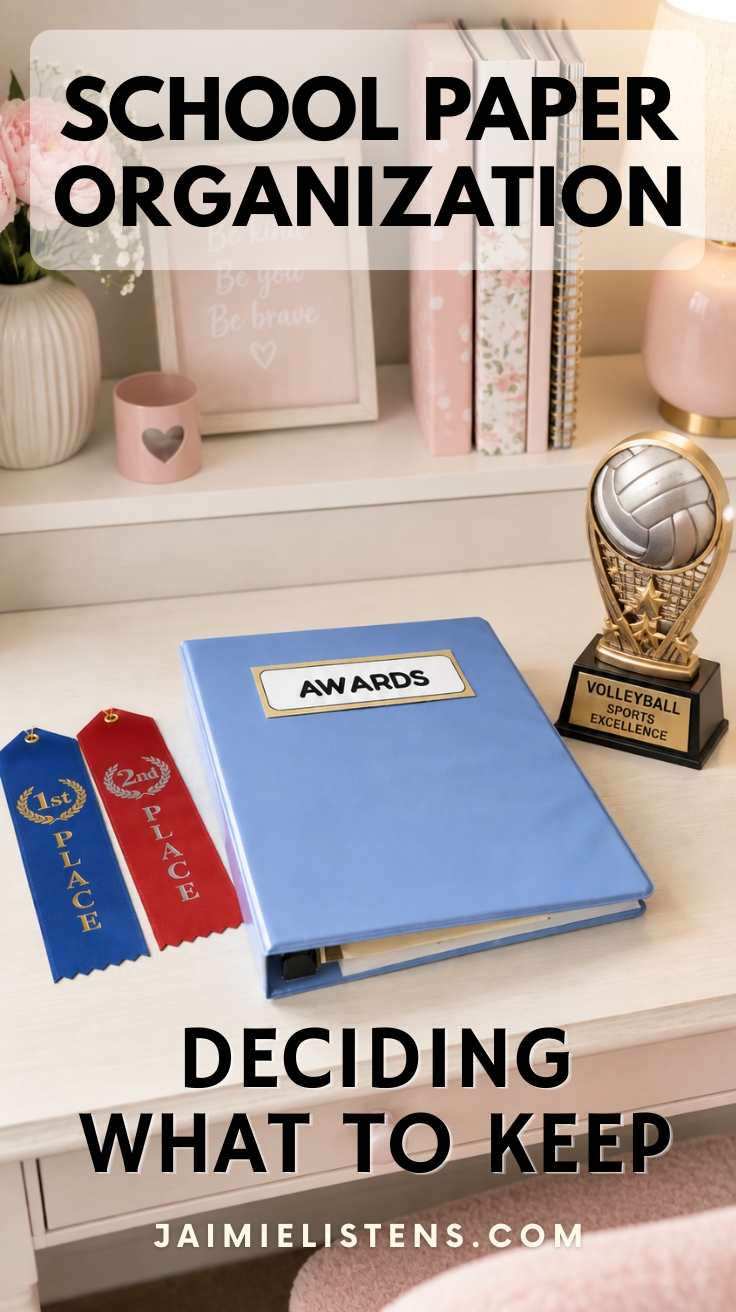
Awards and keepsakes are a little different from artwork because they tell the story of your child’s experiences. These are the things they’ll probably enjoy looking back on years from now, even if they don’t seem like a big deal today.
This is a great place to keep items like:
- Certificates and awards
- Yearbooks
- Class photos
- Graduation programs
- Newspaper clippings
- Special notes from friends or teachers
- Tickets, ribbons, medals, or other small mementos
Some of my favorite keepsakes aren’t awards at all. I still have the junior high T-shirt I designed after winning a school-wide design contest. Every time I see it, I’m reminded how excited I was that my artwork had been chosen. I also kept one of the hand-lettered invitations I designed for a school-wide event. This was back before Cricut and Canva. And yes, it was after the printing press was invented. I know you were thinking it.
Those things don’t have much monetary value, but they remind me of what I enjoyed doing and who I was at that age. That’s what makes them worth keeping.
Your child’s keepsake box doesn’t have to be overflowing to be meaningful. A handful of thoughtfully chosen memories each year will tell a much richer story than saving every certificate, flyer, and participation ribbon that comes home.
Keep Important School Records That Can Help Your Child Later
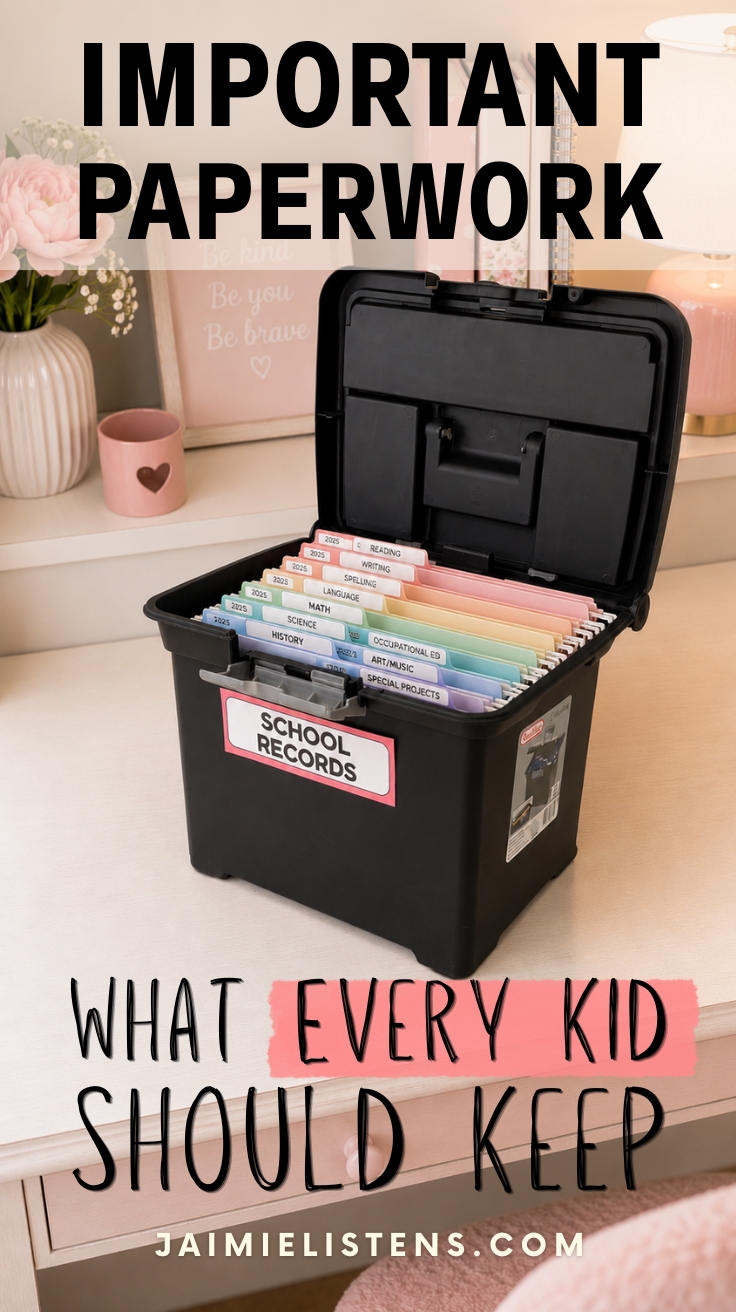
Some school papers are worth keeping because they’ll actually be useful years from now. This is the category where I recommend creating a file for each child, then organizing it by school year. It makes finding something later much easier, whether your child is applying for college, looking for a job, or simply needs an old record.
Of course you’ll want to save report cards, transcripts, standardized test results, and homeschool records if they apply to your family. Those are the obvious ones.
I also recommend keeping a simple record of volunteer work, community service, internships, and even small jobs like babysitting, pet sitting, lawn mowing, or shoveling snow. Write down when they started, when they finished, what they did, and who supervised them. If someone is willing to be a future reference, keep their name and contact information with those records.
Speaking of references, encourage your teenager to ask teachers, coaches, employers, mentors, or volunteer coordinators for a recommendation letter before they graduate or move on. People retire, move away, and memories fade. It’s much easier to ask while they still remember your child and the work they did.
It also isn’t too early to start a simple resume. Every volunteer position, leadership role, club, award, part-time job, or community activity helps tell the story of who they are. By the time they’re applying for college, scholarships, or their first full-time job, they’ll already have much of the information they need instead of trying to remember everything years later.
This category isn’t just about keeping papers organized. It’s about giving your child a head start. A little organization today can save hours of frustration and may even give them an advantage when opportunities come along in the future.
Review Your School Paper Organization System Once a Year
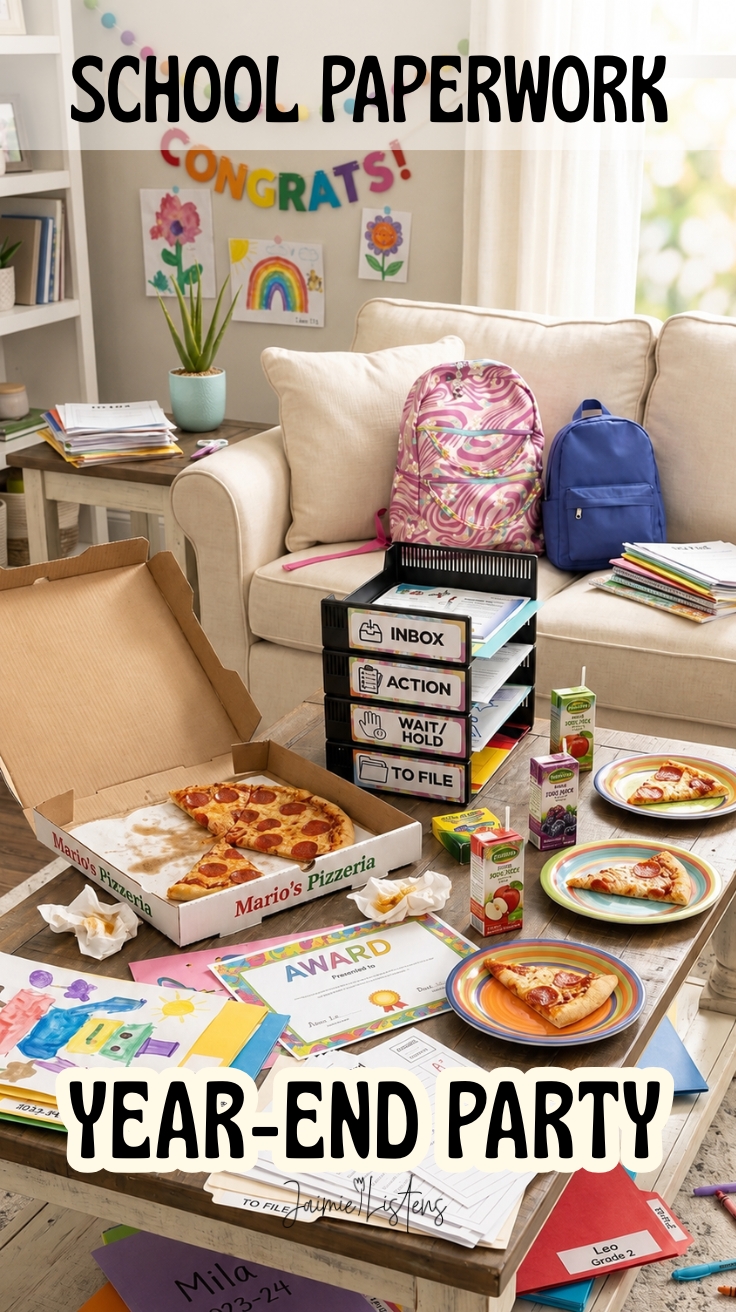
One of the easiest ways to keep your school paper organization system under control is to review it once a year. I actually recommend doing this during the first week of summer, not the week before school starts.
If you do it immediately, the school year is still fresh in everyone’s minds. Your kids can remember which projects they’re proud of, which artwork they want to keep, and what they’re ready to let go. Waiting until August means you’re trying to make those decisions while buying school supplies, replacing clothes that no longer fit, signing kids up for activities, and getting everyone back on a school schedule. You’re already well aware that you’ve got enough going on.
I like to turn this yearly review session into a little accomplishment pizza party. Another school year is in the books, so celebrate it! Order a pizza, grab a favorite drink, and spend an hour going through each child’s papers together. File the important records, choose a few meaningful keepsakes, recycle the rest, and start summer with a clean slate.
By the time you’re finished, each child’s backpack is empty, their keepsakes have been updated, and their important records are safely filed away. Better yet, when back-to-school season rolls around next year, you won’t be dealing with last year’s paper mess while you’re already knee-deep in school supplies, new shoes, and schedule chaos.
A little effort at the beginning of summer makes the next school year much easier. I think that’s a pretty good trade for a couple slices of pizza.
Why This School Paper Organization System Teaches Kids Real-Life Skills
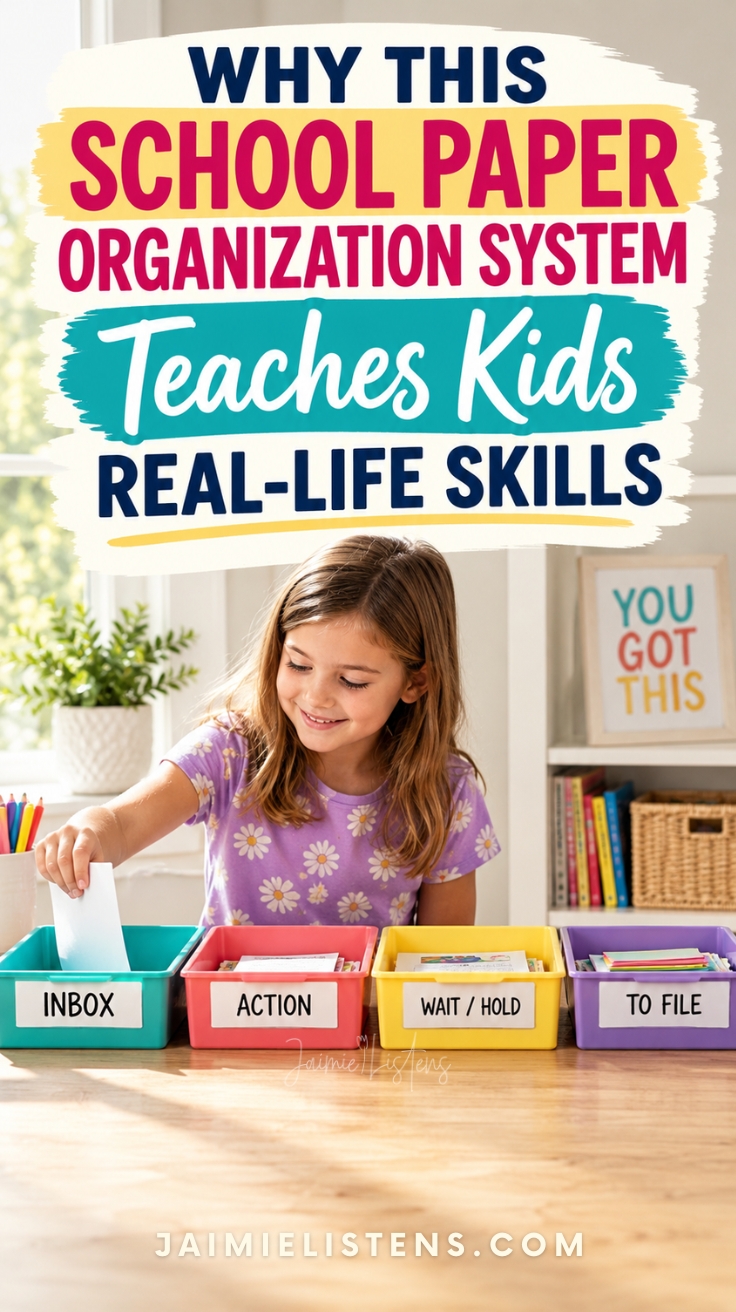
One of my favorite things about the Kids 4×4 Paper System is that it does more than organize school papers. It teaches kids how to think in systems.
They learn that papers have jobs. Some need action or are waiting on something. Some need to be saved. Others can leave the house forever with our blessing.
That kind of thinking carries into adulthood. Someday those school papers turn into bills, tax forms, job applications, insurance papers, leases, warranties, and all the other grown-up paperwork nobody is magically born knowing how to handle.
I also think kids need to learn this instead of assuming Mom will manage every piece of paper until they move out. Boys especially need these skills, because organization is not “women’s work.” It’s life work.
Just like kids need to learn how to clean up after themselves, do their own laundry, cook basic meals, meet deadlines, and take responsibility instead of pointing at the dog, they also need to learn how to manage information.
A simple school paper system gives them a safe place to practice before the stakes are high. And if they can learn to sort a permission slip, a report card, and a weird art project now, future them will be much better prepared when real life starts handing them paperwork with consequences.
Disclaimer: Jaimie is not the great and powerful Wizard of Oz, a lawyer, a doctor, a veterinarian, or a CPA. Nothing you read in my blog is a substitute for professional advice and doing your own good research. Remember that just because someone has credentials doesn’t guarantee their advice is golden or perfect. Put your smart hat on and do your due diligence. Good luck!
AI Disclosure: This post was created with the assistance of AI tools for brainstorming, editing, and organization, which helps me manage chronic pain and physical limitations during long writing sessions. All content is based on my real-life experience and is reviewed and edited by me. Some or all images in this post may be AI-generated for illustration and inspiration. Learn more about how I use AI here.

Leave a Reply